Posts

Let’s Put Our Heads Together and Think About This One: A Primer on Ethical Issues Surrounding Brain-to-Brain Interfacing

Image
By John Trimper Graduate Student, Psychology Emory University This post was written as part of the Contemporary Issues in Neuroethics course Remember the precogs in Minority Report ? The ones who could sync up their brains via the pale blue goo to see into the future? The precogs from the movie Minority Report Recent findings published in Scientific Reports (Pais-Vieira et al., 2013) suggest that the ability to sync up brains is no longer purely sci-fi fodder, and instead, has moved into the realm of laboratory reality. The relevant set of experiments, conducted primarily at the Nicolelis laboratory at Duke University, demonstrated that neural activity related to performance on a discrimination task could be recorded from one rat (“the encoder”) and transferred into a second rat’s brain (“the decoder”) via electrical stimulation. This brain-to-brain transfer of task-relevant information, provided the encoder rat was performing the task correctly, significantly enhanced the decoder...

Now Available! Neuroethics Journal Club Video Archives on YouTube

Image
The Neuroethics Journal Club videos are now available on YouTube. Watch each discussion to learn about a variety of neuroethics issues, from treatments for pedophilia to neural plasticity in mice. For each video, one presenter introduced the journal topic and opened discussion to the audience.  Neuroethics Journal Club : The Sexed Brain The Sexed Brain: Between Science and Ideology Catherine Vidal, Neuroethics, 2012  Abstract : Despite tremendous advances in neuroscience, the topic “brain, sex and gender” remains a matter of misleading interpretations, that go well beyond the bounds of science. In the 19th century, the difference in brain sizes was a major argument to explain the hierarchy between men and women, and was supposed to reflect innate differences in mental capacity. Nowadays, our understanding of the human brain has progressed dramatically with the demonstration of cerebral plasticity. The new brain imaging techniques have revealed the role of the environme...

The identification of risk for serious mental illnesses: Clinical and ethical challenges

Image
By Elaine Walker, Ph.D., Sandy Goulding, MPH, MA., Arthur Ryan, MA., Carrie Holtzman, MA., Allison MacDonald, MA. Elaine Walker is Samuel Candler Dobbs Professor of Psychology and Neuroscience in the Department of Psychology at Emory University .  She leads a research laboratory that is funded by the National Institute of Mental Health  to study risk factors for major mental illness.  Her research is focused on child and adolescent development and the brain changes that are associated with adolescence. The identification of risk factors for illness is receiving increased attention in all fields of medicine, especially cardiology, oncology, neurology and psychiatry.  There are three potential benefits to identifying risk factors. The first is to reduce morbidity by reducing risk exposure. The second is to enhance opportunities for targeting preventive treatment toward those who are most likely to benefit. Finally, the identification of risk factors can shed light o...

Dancing with the Devil

Image
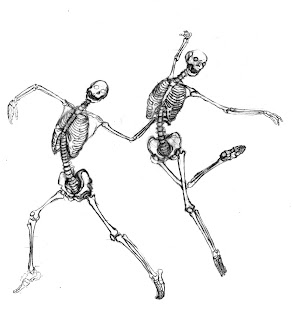
Hysteria usually calls to mind thoughts of the Salem Witch Trials and delirious frenzies from history. However, mass hysteria, or mass psychogenic illness, is not simply an improbable, incomprehensible madness of the past. It has occurred throughout history and into our current generation, taking form as dancing plagues , dissociative possession of nuns , and involuntary twitches of high school girls in New York . Is it something they all ate? Or maybe there is something in the water… How is it that anxiety manifests itself into a dance that spreads among populations? Fear and distress terrorized populations in Medieval Europe and made them more prone to psychogenic illness . Certainly it seems there must be more to the story than merely these common denominators, for fear, anguish, stress, and trauma are commonly faced and dealt with sans mass hysteria. But the other factors needed for the exact formula of mass hysteria are difficult to pinpoint.  Is it the perfect combination o...

Social and Physical Pain on Common Ground

Image
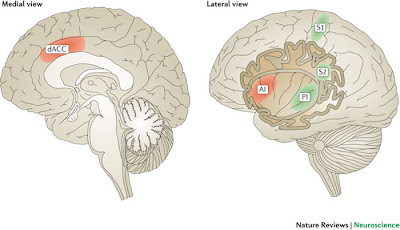
By Guest Contributor Jacob Billings  Neuroscience Graduate Student  Emory University Societal changes, when they occur, coincide with changing outlooks among the populace. Take for example the American Civil Rights movement of the 1960’s. Largely, the motivations corresponding to economic and political enfranchisement for African-Americans and women resulted from changing identities among these groups during the mobilization of all of America’s resources during World War II. Notably, African Americans observed naturally pleasant interactions with European whites during tours of duty in WWII [1]. When returning to the US, it was impossible to allow American racism to continue unchallenged. During that same period, women acquired expertise in a great variety of professions for which they had been refused the opportunity to work [2]. The expectation that women return to a subordinate place in the household was immediately risen against. In our modern age, the outlooks held by our...

A Social Account of Suffering

Image
50,000 cultured brain cells sit in a petri dish. Through a combination of electronic sensors, software engineering and robotic sculpture , the physiology of the cells interacts with the psychology of some patrons of an art gallery [1]. From this transaction, judgments arise - the audience might report feelings of being watched, of play, or simply of remotely observing an oblivious 'seizure machine.' One particular type of audience member, the Animal Ethicist, might even wonder if we should be worried that the culture of brain cells (as a former animal) might be in pain. Brain cells, electrodes, and tiny Peter Singer (image from here ).  While in most cases it is fairly straightforward to determine that a human is in pain, when one starts to asks if non-humans (or even humans with severe communication problems, such as locked-in patients) are in pain, it is common to turn to neuroscience for help. The idea is that while mental states (such as pain and suffering) can only b...

Appreciating Neurodiversity: Learning from Synesthesia

Image
By Guest Contributor Katherine Bryant PhD Candidate, Neuroscience Emory University Who are synesthetes? [Describing the experiences of subject MMo] Eights are yellow, for example, a square feels like mashed potatoes, and the name Steve is somehow like poached eggs. (Cytowic p. 26) “…I [asked the vendor] what kind of ice cream she had.  ‘Fruit ice cream,’ she said.  But she answered in such a tone that a whole pile of coals, of black cinders, came bursting out of her mouth, and I couldn’t bring myself to buy any ice cream after she’d answered that way…” (Record of patient “S”, Luria p. 82) Colored alphabet, via Wikipedia Commons The unexpected sensory pairings described above are the experiences of a minority of people, perhaps 4% of the population (Simner et al., 2006), known as synesthetes. Synesthesia is a perceptual phenomenon in which unusual linkages occur between sensory modalities – sounds may evoke colors, tastes may evoke shapes, or numbers may evoke spatial patterns...