Posts

Why Addiction Narratives Matter
Image
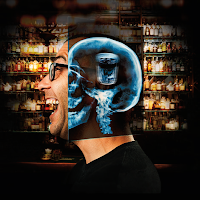
By Katie Givens Kime Image courtesy of Merrimack Repertory Theatre . “My Higher Power is: Science !” proclaims Sean, a newly recovered alcoholic. “Sean” is the lead character in a comedic play, “ The White Chip ,” which premiered last year at Merrimac Repertory Theatre outside of Boston, Massachusetts. Written by Sean Daniels, the play dramatizes Daniels’ own near demise from alcoholism, and his experience of recovery. Neuroethics is writ large as the play tells the story of how critically important various addiction etiologies can be for those struggling with alcoholism, or addiction of any sort. In Sean’s case, the etiology is the brain disease model of addiction (BDMA) in a notable combination with the “Higher Power” understanding of 12-step programs, which he credits with saving his life. Behind the curious twists of the play, questions linger: which model of addiction should be presented to those in recovery, when so much conflict exists amongst addiction researchers, clinici...

M[Emory] Enhancement and its Implications

Image
By Shweta Sahu Imagine a situation in which you suffer from severe anterograde amnesia , a form of short term memory loss , and can’t recall information presented to you even 7 seconds before-- let alone being able to remember the one thing you went to Target to buy, but forgot. Such is the case of Clive Wearing , a man known for his lack of short term memory. His wife notes, “you ask him a question and he’ll give you an answer but while he’s giving me the answer, he’s already forgotten the question. That’s how short it is.” He himself notes “the brain has been totally inactive—day and night the same—no thoughts at all.” Though this is one of the most severe cases of amnesia observed, it underscores how crucial memory is not only to every day functioning, but also for one’s sense of self. Autobiographical memories and the ability to recall these emotional and important events are an integral component of one’s identity. These events, in turn, get tied into personal narratives that our...

What is Feminist Neuroethics About?

Image
By Ben Wills Ben Wills studied Cognitive Science at Vassar College, where his thesis examined cognitive neuroscience research on the self. He is currently a legal assistant at a Portland, Oregon law firm, where he continues to hone his interests at the intersections of brain, law, and society. As the boundaries of what may be considered “neuroethics” extend with the development of new kinds of technologies and the evolving interests of scholars, its branches encounter substantial structures of adjacent scholarship. “Feminist neuroethics” is a multidimensional construct and a name that can be afforded both to approaches that fall within the bounds of mainstream neuroethics and metatheoretical challenges to the scope and lines of debate within neuroethics. While acknowledging that scholarship at the intersections of academic feminism/gender studies, feminist science studies, ethics, and neuroscience is much more substantial and diverse than I’m considering here, my modest aim in this pos...

Neuroeconomics and Reinforcement Learning: The Concept of Value in the Neuroscience of Morals

Image
By Julia Haas Julia Haas is an Assistant Professor in the Department of Philosophy at Rhodes College. Her research focuses on theories of valuation and choice. Imagine a shopper named Barbara in the pasta aisle of her local market.  Just as she reaches for her favorite brand of pasta, she remembers that one of the company's senior executives made a homophobic statement . What should she do? She likes the brand's affordability and flavor but prefers to buy from companies that support LGBTQ communities . Barbara then notices that a typically more expensive brand of pasta is on sale and buys a package of that instead. Notably, she doesn't decide what brand of pasta she will buy in the future. Barbara’s deliberation reflects a common form of human choice. It also raises a number of questions for moral psychological theories of normative cognition. How do human beings make choices involving normative dimensions? Why do normative principles affect individuals differen...

Dangerous Love and Anti-Love Drugs: Neuroethics & Public Health Problems

Image
By Kelsey Drewry Kelsey Drewry is a student in the Master of Arts in Bioethics program at the Emory University Center for Ethics where she works as a graduate assistant for the Healthcare Ethics Consortium. Her current research focuses on computational linguistic analysis of health narrative data, and the use of illness narrative for informing clinical practice of supportive care for patients with neurodegenerative disorders. The half-priced heart-shaped boxes of chocolates lining grocery store shelves serve as an undeniable marker of the recent holiday. Replete with conceptions of idyllic romance, Valentine’s Day provides an opportunity to celebrate partnership, commitment, and love. However, for those experiencing heartbreak or unrequited love, Cupid may be a harbinger of suffering rather than giddy affection. The transition from love to pain is an incredibly common experience, and one that is formative for many. The extent of character building in heartbreak and other negative affe...

When Neuroethicists Become Labmates

Image
By Timothy Brown and Margaret Thompson Timothy Brown is a doctoral student and research assistant at the University of Washington (UW). He works with the Center for Sensorimotor Neural Engineering's ( CSNE ) Neuroethics Trust, where he explores the broader moral and societal implications of neural engineering and neural technology use. Through the CSNE’s support, he is also embedded in the UW's  BioRobotics Lab , where he investigates issues of autonomy and agency that arise for people with motor disorders who use next-generation, neurally-controlled deep-brain stimulators to manage their symptoms.  Margaret Thompson is a doctoral student in the BioRobotics Laboratory in the Electrical Engineering department at University of Washington, Seattle; she is also president of the Student Leadership Council at the CSNE. She received her Master’s in Electrical Engineering from University of Washington in 2016 and her Bachelor’s in Engineering from Harve...