Posts

Showing posts with the label Brain

Dare to be different: Defense of the research of sex differences
Image
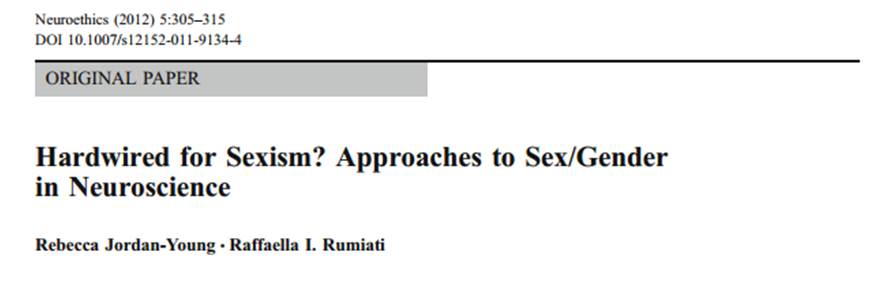
By Guest Contributor, Emory Neuroscience and Animal Behavior Graduate Student Katy Renfro In a recent article published in the journal Neuroethics , Dr. Rebecca Jordan-Young and Dr. Raffaella Rumiati argue that current research on sex differences is “both unscientific and far from politically neutral,” and should be abandoned. [6] This article reflects many of the current conversations on the ethical implications of researching sex differences, which have largely focused on how results of these studies can be misappropriated to support sexist agendas. I cannot argue against the legitimacy of these concerns, and as researchers, we must always be careful to present our findings in a balanced and accurate manner so as to better combat misinterpretations and misrepresentations of data. However, we must also keep in mind that just as science has the potential to influence social and political conversations, this is a bidirectional relationship, and politics also have the power to misinform ...
Judging brains with preclinical disease

Image
By Guest Contributor, Jagan Pillai, MD, PhD Dr. Jagan Pillai is a neurologist at the Lou Ruvo Center for Brain Health, Cleveland Clinic and works to help people with cognitive changes from neurological disorders and to develop diagnostic and treatment strategies in neurodegenerative diseases. He trained as a medical doctor at the University of Kerala, Trivandrum, India. He obtained a PhD from Northwestern University. He trained in Neurology at the Albert Einstein College of Medicine and at the University of California San Diego. As a neurologist interested in neurodegenerative disorders, I met Phil and a few others with preclinical Huntington’s disease (HD), on a trip to Phoenix, AZ to take in their perspectives. Phil is a self-appointed counselor, caretaker, and community leader of PHDs. He chuckles as he credits his accomplishments to having been born a PHD (in his lingo, Person with Huntington’s disease). HD is a neurodegenerative disorder caused by an expanded number of triplet re...

Incomplete Nature: How Mind Emerged from Matter

Image
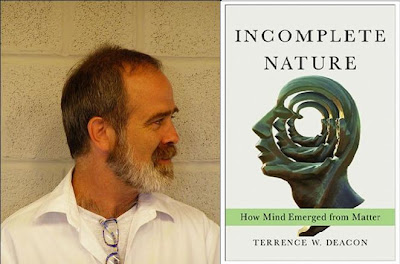
Let me preface this by saying that Incomplete Nature is probably one of the most daring and original published scientific monographs I’ve ever read. Of course, it could also be one of the worst, it's actually impossible to tell. That said, I’ve had Terrence Deacon’s first book, The Symbolic Species , sitting on a shelf at my house for about five years now. I picked it up when I was a sophomore in college, at the second link of a five-year chain that went evolutionary biology → evolutionary psychology → cognitive neuroscience → philosophy of mind → consciousness → causality and information theory → oh-my-God-nothing-is-real. At the time I clearly wasn’t ready for the book, as I read about the first ten pages before putting it down. This was for two reasons. The first is that his books are long, dense, and convoluted, and his sentences tend to loop-the-loop back on themselves and self-cannibalize. This is certainly true for Incomplete Nature , which clocks in at over...

Neuroethics journal club: jobbing on the sleep

Image
Feeling tired? You’re not the only one. According to a 2009 poll conducted by the National Sleep Foundation, 20% of Americans sleep less than six hours a night. How can people even do their jobs with less than six hours of sleep? Oh. Before you get too impressed by my ability to cite statistics, I should tell you I’m quoting directly from the article we read for the most recent meeting of the Neuroethics program’s journal club: “Examining the Effects of Sleep Deprivation on Workplace Deviance: a self-regulatory perspective” by Michael Christian and Aleksander Ellis. Dr. Gillian Hue presented the article. Not only did Gillian study sleep and circadian rhythms as a graduate student, she also has extensive experience with sleep deprivation thanks to her young son, Lucas (hey, she made that joke, not me). One of the first things Gillian asked was how many of us had gotten seven hours or more of sleep the night before. Only two people raised their hands: Kristina Gupta and Cyd Cipolla...