Posts

Showing posts with the label prodromal

Getting Out While the Getting's Good

Image
By Dena Davis Dr. Davis is currently at Lehigh University. She taught at Cleveland-Marshall College of Law (Cleveland State University) and Central Michigan University. She received her doctorate in religion from the University of Iowa and her J.D. from University of Virginia. Her specialty is bioethics, and her specific focus is on the ethics of genetic medicine and genetic research. Dr. Davis’ latest book is  Genetic Dilemmas: Reproductive Technology, Parental Choices, and Children’s Futures  (2nd Edition, University of Oxford Press, 2010). Dr. Davis has been a Fulbright scholar in India, Italy, Israel, Indonesia, and Sweden. Dr. Davis serves on the Central Institutional Review Board of the National Cancer Institute , and is a member of the NIH Embryonic Stem Cell Eligibility Working Group. A number of times in the last two years I have been invited to speak about Alzheimer’s disease (AD). The venues have all been academic, but nonetheless have differed widely: South...
Diagnostic dilemmas: When potentially transient preexisting diagnoses confer chronic harm

Image
By Elaine Walker Elaine Walker is the Charles Howard Candler Professor of Psychology and Neuroscience at Emory University.   She leads a research laboratory that is funded by the National Institute of Mental Health (NIMH) to study risk factors for psychosis and other serious mental illnesses.  Her research is focused on the behavioral and neuromaturational changes that precede psychotic disorders.   She has published over 300 scientific articles and 6 books.  The diagnostic process can be complicated by many factors. Most of these factors reflect limitations in our scientific understanding of the nature and course of disorders. But in the current US healthcare climate, legislative proposals concerning insurance coverage for preexisting conditions add another layer of complexity to the diagnostic process. It is a layer of complexity that is riddled with ethical dilemmas which are especially salient in the field of mental health care. The following d...

Predicting Psychosis: Exploring Pre-Clinical Signs for Mental Illness

Image
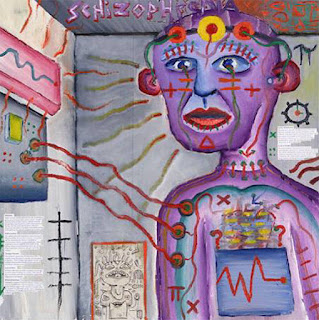
By Sunidhi Ramesh This post is based on the January edition of the “Neuroethics and Neuroscience in the News” series in which Dr. Elaine Walker from Emory University discussed the ethics of assessing risk and treating brain diseases before they can be diagnosed. This self-portrait is often used to depict the distorted reality that many schizophrenia patients face. (Image courtesy of Wikimedia   Commons .) “This calculator,” a 2016 headline states, “can predict your risk of developing psychotic disorders.” Psychotic disorders , including schizophrenia and bipolar disorder with psychotic features, are characterized by noticeable deficits in “normal” behavior accompanied by hallucinations, delusions, paranoia, an early onset (the average age of onset is in the late teens or early twenties), and a derailed life course. Because of its early age at onset, the DALY (disability adjusted life years) value for psychosis is significantly greater than that of other illnesses (1). It’s no su...

Early Intervention and The Schizophrenia Prodrome

Image
On May 7 th the Emory University Graduate Students in Psychology and Neuroscience (GSPN) hosted a colloquium talk given by Vijay Mittal , assistant Professor of Psychology and Neuroscience at the University of Colorado at Boulder. In the talk, titled “Translational Clinical Science in the Psychosis Prodrome: From Biomarkers to Early Identification and Intervention,” Dr. Mittal, who received his Ph.D. from Emory, discussed some of his research on the prodrome for schizophrenia. 1 Dr. Vijay Mittal The prodrome for schizophrenia is a collection of neurological and psychological symptoms that can indicate risk for developing schizophrenia (as has been discussed previously on this blog) prior to the development of clinically relevant symptoms. Research on the prodrome is gaining much attention and funding because it could lead to a better understanding of how schizophrenia develops and better ways to intervene prior to its onset. Mittal began his talk with a background on the schizoph...

Translating Preclinical Test Results into “Real World” Consequences

Image
By Jalayne J. Arias, JD, MA Jalayne J. Arias is the Associate Director of the NeuroEthics Program and Assistant Professional Staff in the Department of Bioethics at the Cleveland Clinic. Ms. Arias’ work incorporates empirical and conceptual projects addressing critical legal and ethical issues inherent in diagnosing, treating, and researching Alzheimer’s disease and other neurodegenerative conditions. Most recently, she served as the principal investigator for the study Stakeholders’ Perspectives on Preclinical Alzheimer’s Diagnosis: Patients, Families and Care Givers . Her recent publication, Confidentiality in preclinical Alzheimer disease studies (Neurology), addresses confidentiality concerns relevant to biomarker testing in Alzheimer’s. In 2007, Dr. Dubois and co-authors introduced the concept of prodromal Alzheimer’s disease in their Lancet article revising diagnostic criteria. In 2011, the National Institutes of Aging and the Alzheimer’s Association supported a series of...

Autism and looking preferences: The ethics of pre-symptomatic detection

Image
As I have written before , researchers at the Marcus Autism Center are working with eye tracking technologies to identify Autism Spectrum Disorder (ASD) in young children and infants. As Katie Strong described in this blog pos t, a recent article in Nature , titled “Attention to eyes is present but in decline in 2-6-month-old infants later diagnosed with autism,”[1] presented the Marcus team’s most recent findings related to the early identification of ASD traits. They argue that, although there are many different ‘autisms’ with many likely causal pathways, the developmental pathway to ASD is similar. This work is an effort to capture this pathway by focusing on differences in early looking patterns. In this article, they “propose that in infants later diagnosed with ASD, preferential attention to others’ eyes might be diminished from birth onwards”(p. 427). After a brief refresher on the article’s findings and background, I will provide a deeper discussion on the neuroethical concern...

Response to “The Making of a Troubled Mind”

Prophylactic medicine is the new medicine. The primary ethical issue brought up by the paper revolves around the notion of diagnostic testing. Everyone wants to try and catch the disease early so that we can come up with treatment options and help them salvage whatever quality of life they have left. The problem arises because these tests are not perfect. They sometimes miss the targets, leading to false negatives. They also sometimes hit targets that aren’t actually targets, leading to false positives. In both cases, there could be catastrophic consequences. It’s usually one or the other though. So when the condition is more dangerous than the treatment, it’s important to minimize the false negatives, such as in the case of cancers. When the treatment is more dangerous than the condition, however, it’s important to minimize the false positives, such as for hypercoagulability. In the case of schizophrenia, it appears that the symptoms of the condition outweigh the commitment and side-e...