Posts

Showing posts with the label tDCS

International Neuroethics Society Annual Meeting Summary: Ethics of Neuroscience and Neurotechnology

Image
By Ian Stevens Ian is a 4th year undergraduate student at Northern Arizona University. He is majoring in Biomedical Sciences with minors in Psychological Sciences and Philosophy to pursue interdisciplinary research on how medicine, neuroscience, and philosophy connect.  At the 2017 International Neuroethics Society Annual Meeting, an array of neuroscientists, physicians, philosophers, and lawyers gathered to discuss the ethical implications of neuroscientific research in addiction, neurotechnology, and the judicial system. A panel consisting of Dr. Frederic Gilbert with the University of Washington, Dr. Merlin Bittlinger , with the Universitätsmedizin Berlin – Charité, and Dr. Anna Wexler with the University of Pennsylvania presented their research on the ethics of neurotechnologies. Dr. Gilbert discussed the cultivation and development of neurotechnologies that use artificial intelligence (AI) to operate brain-computer interfaces (BCI), such as the implanted seizure advisory s...

Transcranial Magnetic Stimulation and Humanity

Image
By Ethan Morris This post was written as part of a class assignment from students who took a neuroethics course with Dr. Rommelfanger in Paris of Summer 2016. Ethan Morris is a rising undergraduate senior at Emory University, majoring in Neuroscience and Behavioral Biology with a minor in History. Ethan is a member of the Dilks Lab at Emory and is a legislator on the Emory University Student Government Association. Ethan is from Denver, Colorado and loves to ski. Do you ever want to turn your brain off, even just for a moment? Most of us have probably wanted to get away from the daily stressors and concerns that plague our lives. But aside from a vacation, how can we truly get away? Some people are beginning to turn this hypothetical question into reality. One man, Thomas Thwaites, decided he would live as a goat for a few days, choosing to forego life as a human in favor of four-legged prosthetics and an all-grass diet. To achieve goat-hood, Thwaites used an increasingly prominent ...

Cognitive Enrichment on Cognitive Enhancement at the Michigan Undergraduate Philosophy Conference

Image
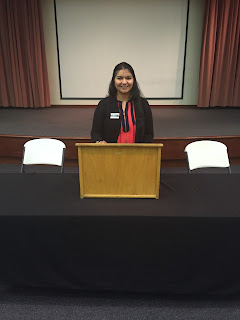
By Shweta Sahu Photo Credit: Anne Trelfa On February 19, the  Michigan Undergraduate Philosophy Conference assembled for the 4th annual meeting at the Insight Institute of Neurosurgery and Neuroscience in Flint, Michigan. The program is jointly hosted by the Center for Cognition and Neuroethics and the University of Michigan-Flint Philosophy Department . I had the pleasure of attending and presenting at this incredible event through the generous support of the American Journal of Bioethics Neuroscience and the Neuroethics Program at Emory. The goals of the Center for Cognition and Neuroethics are to promote “the exploration of conceptual foundations of neuroscience” and to “study the implications of their advances for society in the legal, political, and ethical realms.” The conference, organized by Cody Hatfield-Myers, a senior at the University of Michigan- Flint, brought together students from multiple states in the US and even a few students from Canada. The event, directed...

Responsibility: Revis(ion)ing brains via cognitive enhancement

Image
By Shweta Sahu The Statue of Liberty, an iconic symbol of American opportunity; courtesy of Wikipedia Most every parent wants their child to grow up to be a neurosurgeon, a lawyer, or the next gen Mark Zuckerberg . That was especially true in my case, as a first generation child. When I was two, my parents came to the United States, "the land of opportunity," seeking the success that they had only heard about in India. I grew up hearing their stories of hardship when they first moved here with an infant, without a car, without any extended family, and knowing very little working English. I witnessed them struggle tirelessly to make a life for themselves and they always said that without education you are nothing and will be no one. As a child, while my friends would go to sleepovers and camping trips with friends, my dad would spend time checking my math problems on the white board at home and my mom would make me spell 50 words correctly every night. But even with all that p...