Posts

Showing posts with the label neuro-development

Neuroscience and Human Rights
Image
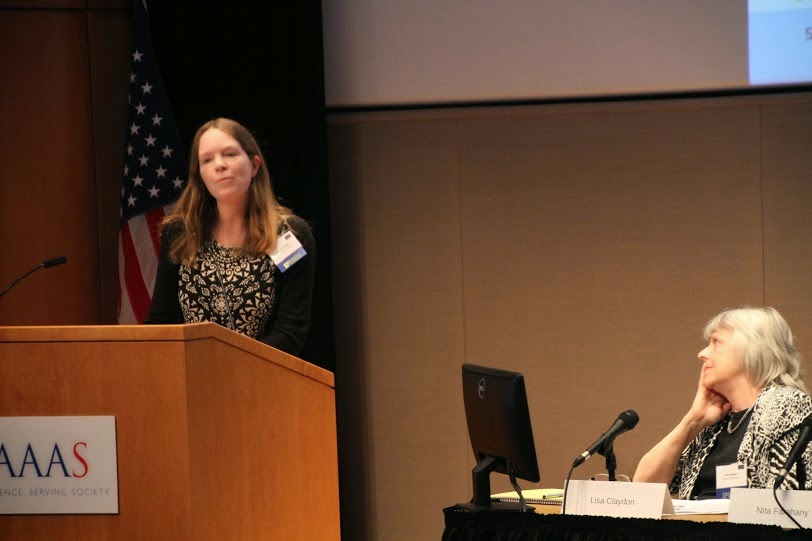
Last month, I had the privilege of attending the International Neuroethics Society Meeting in Washington, DC, made possible by a travel award from the Emory Neuroethics Program. This year's meeting featured panelists from diverse backgrounds: government, neuroscience, ethics, law, engineering, public health, and others. Each participant and attendee offered her unique perspectives on topical issues in neuroethics. As I listened to many thought-provoking presentations and discussions, a question kept arising in my mind: to what extent should scientists engage with issues of social justice if their research findings support changes in public policy? As a "war on science" continues to be waged by members of the U.S. Senate and Congress (see Senator Coburn's 2014 " Wastebook ," and the recent NPR Science Friday response by targeted scientists) and the American public lags in scientific literacy (A NSF report this year found that 1 in 4 Americans think the sun...

The sound of silence: Fetal alcohol spectrum disorder

Image
By Emily Bell, PhD Dr. Emily Bell is Researcher at the Neuroethics Research Unit, Institut de recherches cliniques de Montréal (IRCM). Dr. Bell’s MSc and PhD research in Psychiatry at the University of Alberta focused on investigating brain activity in mood and anxiety disorders using functional magnetic resonance imaging (fMRI). Her postdoctoral work shifted her into the field of neuroethics, where she examined ethical and social challenges associated with deep brain stimulation in psychiatric disorders. As an investigator of the Neuroethics Core of NeuroDevNet , a Canadian Network of Centres of Excellence , Dr. Bell has been involved in a wide range of network activities and research in the area of pediatric ethics. This includes recent work on the implications of stigma for public health policies and practices in fetal alcohol spectrum disorder and ethical concerns associated with the transition of youth with neurodevelopmental disorders to adult health services. Dr. Bell has bee...

Uncovering the Neurocognitive Systems for 'Help This Child'

Image
In their article, “ Socioeconomic status and the brain: mechanistic insights from human and animal research ,” Daniel A. Hackman, Martha J. Farah , and Michael J. Meaney explore how low socioeconomic status (SES) affects underlying cognitive and affective neural systems. They identify and focus on two sets of factors that determine the relationship between SES and cognitive development: (1) the environmental factors or ‘mechanisms’ that demonstrably mediate SES and brain development; and (2) those neurocognitive systems that are most strongly affected by low SES, including language processing and executive function.  They argue that “these findings provide a unique opportunity for understanding how environmental factors can lead to individual differences in brain development, and for improving the programmes and policies that are designed to alleviate SES-related disparities in mental health and academic achievement” [1]. Neuroscience can tell us how SES may affect her brain. Can ...

Neurosexism and Single-Sex Education (or support your local ACLU)

Image
"N" is for Neurosexism Twenty or thirty years ago, single-sex education for girls was a feminist clause célèbre. However, beginning in the late 1990s and early 2000s, people began to worry that boys were “underperforming” in school and in life (an idea nicknamed “the boys’ crisis” by the popular press). The media framing of the boys’ crisis has been critiqued on a number of fronts – specifically, critics have pointed out that both girls and boys are performing better in school than in the past and that the difference in educational achievement between white and middle-class students and low-income and minority students is far more pronounced than the difference between female and male students (see a 2008 report from the American Association of University Women ). However, despite these critiques, cultural commentators began to advocate for single-sex education in public schools as a solution to the boys’ crisis. Commentators like Michael Gurian (author of Boys and Girls Lea...