Posts

Showing posts with the label science education

Neuroethics as Outreach

Image
By Adina Roskies Adina Roskies   is The Helman Family Distinguished Professor of Philosophy and chair of the Cognitive Science Program at Dartmouth College. She received a Ph.D from the University of California, San Diego in Neuroscience and Cognitive Science in 1995, a Ph.D. from MIT in philosophy in 2004, and an M.S.L. from Yale Law School in 2014. Prior to her work in philosophy she held a postdoctoral fellowship in cognitive neuroimaging at Washington University with Steven Petersen and Marcus Raichle from 1995-1997, and from 1997-1999 was Senior Editor of the neuroscience journal  Neuron . Dr. Roskies’ philosophical research interests lie at the intersection of philosophy and neuroscience, and include philosophy of mind, philosophy of science, and ethics. She has coauthored a book with Stephen Morse,  A Primer on Criminal Law and Neuroscience .  As I write this, I am thinking more broadly about ethics and neuroscience than I usually do, pushed by political ...

Neuroscience and Human Rights

Image
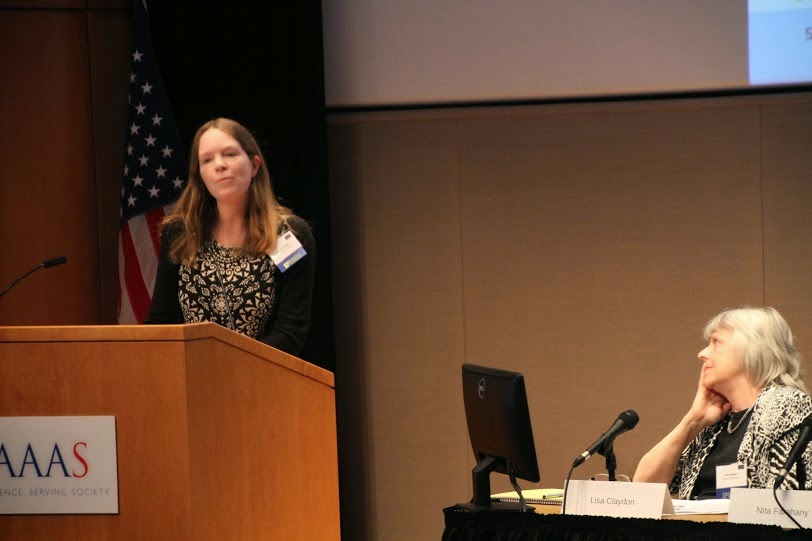
Last month, I had the privilege of attending the International Neuroethics Society Meeting in Washington, DC, made possible by a travel award from the Emory Neuroethics Program. This year's meeting featured panelists from diverse backgrounds: government, neuroscience, ethics, law, engineering, public health, and others. Each participant and attendee offered her unique perspectives on topical issues in neuroethics. As I listened to many thought-provoking presentations and discussions, a question kept arising in my mind: to what extent should scientists engage with issues of social justice if their research findings support changes in public policy? As a "war on science" continues to be waged by members of the U.S. Senate and Congress (see Senator Coburn's 2014 " Wastebook ," and the recent NPR Science Friday response by targeted scientists) and the American public lags in scientific literacy (A NSF report this year found that 1 in 4 Americans think the sun...

Doing Feminist Science/Feminists Doing Science: An interview with Dr. Sari van Anders, Founder of Gap Junction Science Part II

Image
Continued from Part I . In Part II, Dr. van Anders discusses her website, www.gapjunctionscience.org . How did Gap Junction Science come about? Prior to Gap Junction, how did you find and network with feminist scientists? I became really interested in the doing of feminist science – it felt very hard for me to figure things out, and there wasn’t that much community of actual feminist scientists. I wanted to develop a place where feminist science could be discussed – both practice and theory. I sometimes hear people talk about the theory as if it is practice. Of course it’s relevant, but you know what they say about theory and practice: in theory, they’re the same, in practice, they’re not. I was lucky that while I was thinking about these things, there was a call for grants at UM from our ADVANCE program for online networks in science that promote diversity. Feminism isn’t necessarily diverse, but the feminist science I envision at its heart attends to diversity. So, I wanted a space...

The [insert adjective] Brain: Implications for Neuroscience in Popular Media

Image
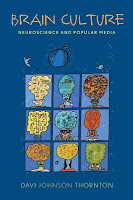
Via amazon.com The Addicted Brain. The Female Brain. The Male Brain. Chemobrain. Buddha’s Brain. The Winner’s Brain. The Republican Brain . These days, it seems that everybody’s brain is being scanned and their behavior analyzed. In fact, these are all titles of books published in the past decade that communicate the latest findings in neuroscience and psychology research to lay audiences. As a budding neuroscientist, I am excited that science, and neuroscience in particular, has now flooded into popular American culture. Evidence of its expanding domain is everywhere: in magazines ( Scientific American ’s “ MIND ”), blogs ( Neuroskeptic ), radio programs (NPR’s “ Radiolab ”), podcasts ( Nature ’s “ Neuropod ”) and books. For further examination of the reasons for this cultural shift, see the discussion of the phenomenon in the new book “ Brain Culture: Neuroscience and Popular Media ,” by Davi Johnson Thorton, Southwestern University's Assistant Professor of Communication Studies....