Posts

Showing posts with the label Psychiatry

Ethical Concerns Surrounding Psychiatric Treatments: Do Academics Agree with the Public?

Image
By Laura Y. Cabrera, Rachel McKenzie, Robyn Bluhm Image courtesy of the U.S. Airforce Special Operations Command . Treatments for psychiatric disorders raise unique ethical issues because they aim to change behaviors, beliefs, and affective responses that are central to an individual’s sense of who they are. For example, interventions for depression aim to change feelings of guilt and worthlessness (as well as depressed mood), while treatments for obsessive-compulsive disorder try to diminish both problematic obsessive beliefs and compulsive behaviors. In addition to the specific mental states that are the target of intervention, these treatments can also affect non-pathological values, beliefs, and affective responses. The bioethics and neuroethics communities have been discussing the ethical concerns that these changes pose for individual identity [1,2], personality [3,4], responsibility [5], autonomy [6,7], authenticity [8], and agency [9,10].  What we did Pharmacological interv...

Early Intervention in Schools: A Site for Empirical Neuroethics

Image
By Ilina Singh, MSc Ilina Singh is a Professor of Science, Ethics, and Society in the department of Social Science, Health, and Medicine at King’s College London, and is cross-appointed to the Institute of Psychiatry . Her work examines the psycho-social and ethical implications of advances in biomedicine and neuroscience for young people and families. She is also a member of the AJOB Neuroscience Editorial Board.   The developmental logic of early intervention is currently all the rage across child care-related sectors, including education, mental health, juvenile justice and social policy. It’s not a new logic by any means (witness longstanding programmes such as HeadStart ), but it has new energy and justification with the emergence of epigenetic theories of development. Epigenetics has brought attention to ‘environment’ to the fore, particularly in pediatrics and in child psychiatry. While epigenetic theories are still that – theories – the last few years have seen a surge...

We’re All Mad Here

Image
In the early 1970’s, eight people checked themselves into psychiatric hospitals throughout the United States, complaining of hearing voices. They were all admitted, and during their hospitalizations exhibited no unusual behavior and claimed to no longer be experiencing auditory hallucinations. After stays between 7 and 52 days in the institutions, the patients were discharged and given diagnoses of either schizophrenia or bipolar disorder. None of these people had any mental illnesses, and had, in fact, falsified their symptoms as part of an experiment conducted by psychologist David Rosenhan (who was himself one of the “pseudopatients”). The results of the study were published in a 1973 paper in Science titled “On being sane in insane places” . In the paper Rosenhan argues that it is difficult to distinguish between “normality” and “abnormality” when it comes to mental health, and that, once applied, the label of a psychiatric diagnosis can be so strong that all of an individual’s ac...

Beyond polemics: science and ethics of ADHD (critique by Yan Hong)

Image
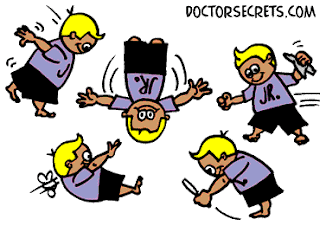
Attention-deficit hyperactivity disorder (ADHD) is one of the most common childhood psychiatric disorders in the world. Its main symptoms consist of inattention (be easily distracted, miss details, and frequently switch from one activity to another or have difficulty organizing and completing a task or learning something new or trouble completing homework assignments), hyperactivity and impulsiveness (fidget and squirm in their seats or talk nonstop or be very impatient) 1 . These symptoms emerge mainly before seven-year old and approximately 75% of those children are male 2,3 . Two criteria are currently used to diagnose ADHD, Diagnostic and Statistical Manual of Mental Disorders, 4th Edition (DSM-IV) and International Classification of Diseases, 10th edition (ICD-10). American psychiatrists follow the DSM-IV, which describes two primary categories of behavioral symptoms: inattention and impulsivity-hyperactivity; and three subtypes of ADHD: inattentive type, hyperactive-impulsive typ...

Beyond polemics: science and ethics of ADHD by Illna Singh (critique by Maylen Perez)

Image
Over the past decade or so, there has been an alarming growth in the number of ADHD diagnoses, and, which is more disturbing, the prescription of stimulants for children with this condition. Concurrent with these increases has been a growing concern in the general public about the legitimacy of ADHD as a real disease and the repercussions and ethical issues of giving kids psychotropic drugs. A hundred years back, this was not a problem. Kids would come to class, be disruptive, not listen, misbehave… and get a whopping smack in the hand or bum with some kind of discipline ruler or other blunt object. The teacher found this behavior to be typical of kids, the parents shook their heads wondering “where did we go wrong?” and life went on. Today, however, there have been striking advances in science that have given us some insight into the factors that contribute to ADHD, tools for recognizing the symptoms of this disease, and yet others for treating it. Or so it seems. Do we indeed ...

Stimulant Treatment of ADHD in Children

Image
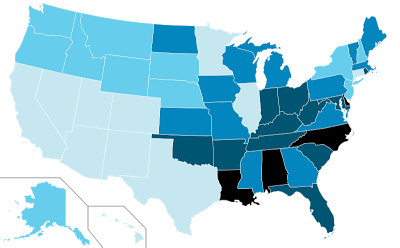
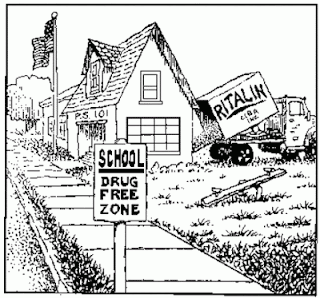
There are many ethical concerns that are raised by the treatment of children with psychotropic drugs. This is especially relevant with the use of stimulants to treat ADHD because of the large number of children receiving stimulant medication. In 2008, 3.5% of children under 18 in the United States received stimulant medication. This was even higher in school age children and adolescents, with 5.1% of 6-12 year olds and 4.9% of 13-18 year olds receiving stimulant treatment. This data indicates that an estimated 2.8 million children received stimulant medication for the treatment of ADHD in 2008 1 . Are stimulants overused? ( Source ) The safety of stimulant medications in children is a large concern because there have not been many longitudinal studies on the effects of stimulant usage, especially for children beginning stimulant usage at a young age. There has been some evidence of serious side effects, including cardiovascular risk, growth suppression, and development or early onset ...

Neurodiversity and autism: where do we draw the line?

Image
In April 2012, the Emory Neuroethics Program conducted an interview with Steven Hyman , the director of the Stanley Center for Psychiatric Research at MIT’s Broad Institute, where he expressed his belief that mental illnesses and developmental disorders should not be thought of as clear and distinct categories. He said that “classifications are, in the end, cognitive schemata that we impose on data in order to organize it and manipulate it…it's really not helpful to act like there's a ‘bright line’ in nature that separates the well from non-well.” Rather, he said, there are spectrums of behaviors, and disorders exist along them with differing degrees of severity. This idea of spectrum disorders is common in modern psychiatry, with a commonly known example being the autism spectrum. This approach groups similar disorders of varying levels of severity along a spectrum which also includes behaviors and emotions classified as normal. While the spectrum approach is often touted a...

Call for "Late Breaking" Abstracts

Image
*Deadline for abstract submissions: August 13, 2012 *  Brain Matters 3:  Values at the Crossroads of Neurology, Psychiatry and Psychology  October 24th-25th, 2012 This conference provides a venue for collaboration and learning in the area of neuroethics. The plenary speakers of this conference will address ethical challenges in the treatment and research for conditions with neurological symptomatology but that are without identifiable biological correlates/causes. The complexities of suffering and disability experienced by individuals with these conditions are significant, including exposure to dangerous and futile treatments. Parallel sessions will include accepted abstracts from a broad range of neuroethics interests.  At this conference, presentations will be given by patients, physicians, neuroscientists, and ethicists and is intended to appeal to a broad audience.  Please see the call for abstracts and conference information at ...

Animal Models and the Future of Psychiatric Research

Image
"Few medicines, in the history of pharmaceuticals, have been greeted with as much exultation as a green-and-white pill containing 20 milligrams of fluoxetine hydrochloride — the chemical we know as Prozac" wrote Columbia University Assistant Professor of Medicine Siddhartha Mukherjee in a recent New York Times editorial on antidepressant efficacy. As Dr. Mukherjee points out, the rise of antidepressants over the past several decades has been swift and staggering. A recent CDC study found that antidepressants are the most commonly prescribed drug for Americans between 18 and 44 years of age, with 11% of Americans over the age of twelve utilizing such medications. Original image from the Global Information Exchange Network In light of such overwhelming usage rates, one would think that pharmaceutical companies would be falling over themselves to invent the next antidepressant superdrug. As it turns out, however, exactly the opposite trend is emerging. Pharmaceutical giants Ast...