Posts

Showing posts with the label Diagnosis

Disrupting diagnosis: speech patterns, AI, and ethical issues of digital phenotyping

Image
By Ryan Purcell, PhD Jim Schwoebel, presenter at April The Future Now: (NEEDS) Diagnosing schizophrenia can be complex, time-consuming, and expensive. The April seminar on The Future Now: (NEEDs) Neuroscience and Emerging Ethical Dilemmas at Emory focused on one innovative effort to improve this process in the flourishing field of digital phenotyping. Presenter and NeuroLex founder and CEO Jim Schwoebel had witnessed his brother struggle for several years with frequent headaches and anxiety, and saw him accrue nearly $15,000 in medical expenses before his first psychotic break. From there it took many more years and additional psychotic episodes before Jim’s brother began responding to medication and his condition stabilized. Unfortunately, this experience is not uncommon; a recent study found that the median period from the onset of psychotic symptoms until treatment is 74 weeks. Naturally, Schwoebel thought deeply about how this had happened and what clues might have been seen ear...

Early Intervention and The Schizophrenia Prodrome

Image
On May 7 th the Emory University Graduate Students in Psychology and Neuroscience (GSPN) hosted a colloquium talk given by Vijay Mittal , assistant Professor of Psychology and Neuroscience at the University of Colorado at Boulder. In the talk, titled “Translational Clinical Science in the Psychosis Prodrome: From Biomarkers to Early Identification and Intervention,” Dr. Mittal, who received his Ph.D. from Emory, discussed some of his research on the prodrome for schizophrenia. 1 Dr. Vijay Mittal The prodrome for schizophrenia is a collection of neurological and psychological symptoms that can indicate risk for developing schizophrenia (as has been discussed previously on this blog) prior to the development of clinically relevant symptoms. Research on the prodrome is gaining much attention and funding because it could lead to a better understanding of how schizophrenia develops and better ways to intervene prior to its onset. Mittal began his talk with a background on the schizoph...

Predicting Alzheimer's Disease: Potential Ethical, Legal, and Social Consequences

Image
By Henry T. Greely, J.D. Henry T. (Hank) Greely is the Deane F. and Kate Edelman Johnson Professor of Law and Professor, by courtesy, of Genetics at Stanford University. He directs the Stanford Center for Law and the Biosciences and the new Stanford Program in Neuroscience and Society   SPINS).  He is also a member of the  AJOB Neuroscience  Editorial Board. Would you want to know the date and time of your death? Life-Line , the first published fiction by Robert A. Heinlein, one of the giants of 20 th century science fiction, explored that question. The story’s protagonist, Hugo Pinero, had invented a machine that could tell precisely when individuals would die, but, as Pinero found to his distress, he could not intervene to change their fates. Would you want to know whether you would be diagnosed with Alzheimer disease (AD)? This question is rapidly leaving the realm of science fiction; indeed, it already has for some unlucky people. Our ability to pred...

Autism and looking preferences: The ethics of pre-symptomatic detection

Image
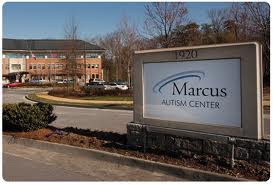
As I have written before , researchers at the Marcus Autism Center are working with eye tracking technologies to identify Autism Spectrum Disorder (ASD) in young children and infants. As Katie Strong described in this blog pos t, a recent article in Nature , titled “Attention to eyes is present but in decline in 2-6-month-old infants later diagnosed with autism,”[1] presented the Marcus team’s most recent findings related to the early identification of ASD traits. They argue that, although there are many different ‘autisms’ with many likely causal pathways, the developmental pathway to ASD is similar. This work is an effort to capture this pathway by focusing on differences in early looking patterns. In this article, they “propose that in infants later diagnosed with ASD, preferential attention to others’ eyes might be diminished from birth onwards”(p. 427). After a brief refresher on the article’s findings and background, I will provide a deeper discussion on the neuroethical concern...

Vegetative States

Image
Functional brain imaging techniques have become a versatile tool for peering into brain and how its activity can manifest as behavior. Nervous system injuries can leave people with varying degrees of functionality and capability. Disabilities can be of the mind such as the inability to perform cognitive tasks like math or impair memory recall or formation. Other injuries can be of the body such as in paralysis or quadriplegia. Unfortunately when it comes to brain injuries, the resulting symptoms are never easily quantifiable. Diagnosis of such patients is complicated by the fact that “There is as yet no universally agreed definition of consciousness and, to an even greater extent, no definition of ‘self-consciousness’ or ‘sense of self/being’“ (Owen and Coleman, 2008). It is thus no surprise that misdiagnosis resulting from brain imaging techniques are as high as 43% (Andrews et al. 1996, Childs et al. 1993). The progression of neuroimaging techniques being used clinically to diagnose ...

Finding and Naming (Symptom) Constellations

Image
By Guest Contributor Racheal Borgman, MA   DSM IV-TR via Wikipedia.org The rhetorical component of illness is an important extension to the issues raised in last month’s post on the DSM . As Anjana Kallarackal pointed out, there are concerns aplenty when it comes to the DSM and how the committee goes about its categorizing work. But I was especially interested by the very first response to the post, by David Nicholson : "I wonder if it would be useful to try to put a number to the "negative consequences" of a given addiction… If we could decide how damaging some addiction was, maybe that would tell us how much to medicalize it as well. Insurance companies could decide that they'd cover cognitive behavioral therapy for internet addiction, but nothing beyond that." It’s an incredibly tempting solution. But then there’s the pesky rhetorical component of illness that must be contended with. For instance, how do we: know that an illness is an illness? know that a p...

Frontiers in Neuroscience, January 27th, 2011: Emory's Dr. Elaine Walker on "Neurodevelopmental Mechanisms in the Emergence of Psychosis"

Image
Psychotic disorders like schizophrenia affect about 5% of people and often result in life-long disability. Identifying at-risk individuals and predicting disease onset are crucial, and present a challenge to the development of preventative treatments. Understanding the biological mechanisms underlying psychosis are also extremely important in identifying risk factors and designing treatments. Because psychotic disorders are so disabling and usually irreversible, research interests in this field have shifted toward prevention and early intervention. Subtle pre-clinical deficits in psychosocial and neurocognitive functioning have been reported for many years and are now being extensively studied. Elucidating this pre-illness state, known as the “prodromal” period, is one area of research for Dr. Elaine Walker, the Samuel Candler Dobbs Professor of Psychology and Neuroscience at Emory University. Dr. Walker spoke at the Frontiers in Neuroscience Seminar Series on Friday, January 27 th , ...