Posts

Showing posts with the label physical pain

Social and Physical Pain on Common Ground
Image
By Guest Contributor Jacob Billings  Neuroscience Graduate Student  Emory University Societal changes, when they occur, coincide with changing outlooks among the populace. Take for example the American Civil Rights movement of the 1960’s. Largely, the motivations corresponding to economic and political enfranchisement for African-Americans and women resulted from changing identities among these groups during the mobilization of all of America’s resources during World War II. Notably, African Americans observed naturally pleasant interactions with European whites during tours of duty in WWII [1]. When returning to the US, it was impossible to allow American racism to continue unchallenged. During that same period, women acquired expertise in a great variety of professions for which they had been refused the opportunity to work [2]. The expectation that women return to a subordinate place in the household was immediately risen against. In our modern age, the outlooks held by our...

Being Careful About How We Use Evidence for the "Reality" of Social Pain

Image
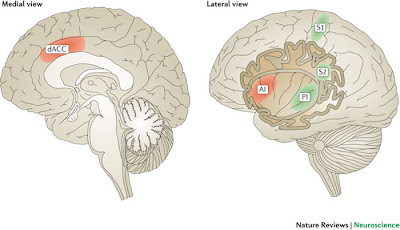
Images courtesy of the Social and Affective Neuroscience Laboratory at UCLA. Neuroscience is changing the way we view the brain. It is also changing the way we view ourselves. Discoveries announced in journal web pages one day find themselves as fuel for debate on newspaper op-ed pages the next. Some of these discoveries have practical implications and point toward promising new medical therapies. Others suggest new - and often troubling - approaches for dealing with social or legal problems. Many simply shed new light on long-standing questions about human nature. Like it or not, the evidence that supports these discoveries turns out to be quite persuasive. Wearing the mantle of science, decorated with images that hint at the workings of the human mind, it commands a special, and perhaps not entirely deserved, authority. This evidence is also subject to being appropriated for purposes beyond that supported by conclusions of the research which gave rise to it. Consequently, we must be ...