Posts

Showing posts with the label criminal justice system

Solitary Confinement: Isolating the Neuroethical Dilemma

Image
By Kristie Garza   Eastern State Penitentiary Image courtesy of Wikimedia Commons In 1842, Charles Dickens visited the Eastern Penitentiary in Philadelphia to examine what was being called a revolutionary form of rehabilitation. After his visit, he summarized his observations into an essay in which he stated, “I am only the more convinced that there is a depth of terrible endurance in it which none but the sufferers themselves can fathom, and which no man has a right to inflict upon his fellow-creature. I hold this slow and daily tampering with the mysteries of the brain, to be immeasurably worse than any torture of the body” (1).  Dickens’ words describe solitary confinement. While there is no one standard for solitary confinement conditions, it usually involves an individual being placed in complete sensory and social isolation for 23 hours a day. What Dickens observed in 1842 is not unlike current solitary confinement conditions . At its start, the justice system was meant...
Too far or not far enough: The ethics and future of neuroscience and law

Image
By Jonah Queen Image courtesy of  Pixabay . As neurotechnology advances and our understanding of the brain increases, there is a growing debate about if, and how, neuroscience can play a role in the legal system. In particular, some are asking if these technologies could ever be used to accomplish things that humans have so far not been able to, such as performing accurate lie detection and predicting future behavior. For September’s Neuroethics and Neuroscience in the News event, Dr. Eyal Aharoni of Georgia State University spoke about his research on whether biomarkers might improve our ability to predict the risk of recidivism in criminal offenders. The results were published in a 2013 paper titled “ Neuroprediction of future rearrest 1 ," which was reported in the media with headlines such as “ Can we predict recidivism with a brain scan? ” The study reports evidence that brain scans could potentially improve offender risk assessment. At the event, Dr. Aharoni led a discus...

Racial Biases in Face Judgment- When You “Look” Criminal

Image
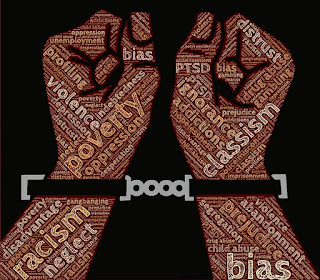
By Carlie Hoffman Image courtesy of Pixabay Racial bias can, and often does, occur in several elements of the criminal justice process, including on initial police contact, during eye-witness identification, and in jurors’ decisions. This disparity of how people are treated throughout the justice system is likely influenced by the criminal black male stereotype that pervades our American culture (1). Some propose that this stereotype originated in the slavery and post-slavery eras, with the onset of Jim Crow laws and other post-slavery codes that instigated segregation and also sanctioned racially-biased punishments for blacks, and especially for black males. Racially-biased punishments are still present today, with a 2015 article in Slate magazine citing that black Americans are more likely to have their cars searched, to be arrested for drug use, to be jailed while awaiting a trial, and to serve longer sentences for the same offense as white Americans. The presence of racial ...