Posts

Showing posts with the label neurodiversity

Neuroethics in the News Recap: Psychosis, Unshared Reality, or Clairaudiance?

Image
By Nathan Ahlgrim Even computer programs, like DeepDream, hallucinate. Courtesy of Wikimedia Commons . Experiencing hallucinations is one of the most sure-fire ways to be labeled with one of the most derogatory of words: “crazy.” Hearing voices that no one else can hear is a popular laugh line (look no further than  Phoebe in Friends ), but it can be a serious and distressing symptom of schizophrenia and other incapacitating disorders. Anderson Cooper demonstrated the seriousness of the issue, finding the most mundane of tasks nearly impossible as he lived a day immersed in simulated hallucinations. Psychotic symptoms are less frequently the butt of jokes with increasing visibility and sensitivity, but people with schizophrenia and others who hear voices are still victims of stigma . Of course, people with schizophrenia deserve to be treated like patients in the mental healthcare system to ease their suffering and manage their symptoms, but there is a population who are at peace w...
A CRISPR View of Life

Image
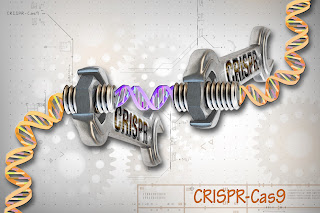
By Shweta Sahu Image courtesy of Wikimedia Commons We now live in a society where many are trying to get a leg up where they can, whether it be through pharmacological neuroenhancement (like Ritalin and Adderall) or other neurotechnologies (like transcranial direct current simulation ). Technology also allows us to exert an even earlier influence on neurodevelopmental disorders through prenatal genetic testing for fetuses. Such technologies include amniocentesis and chorionic villus sampling , that screen for Down’s , Edwards ’ and Patau’s syndromes, and give parents the chance to decide whether they would like to terminate or continue with their pregnancy. One article even claims 53% of all pregnancies were aborted following prenatal diagnoses of Down’s Syndrome, though there is still much dispute over the exact numbers. More recently, research has turned to looking into how to intervene at even earlier stages with gene editing of embryos . CRISPR (clustered regularly interspace...

Disease or Diversity: Learning from Autism

Image
by Jillybeth Burgado The following post is part of a special series emerging from Contemporary Issues in Neuroethics, a graduate-level course out of Emory University’s Center for Ethics.  Jillybeth is a senior undergraduate double majoring in neuroscience and behavioral biology and religion. She hopes to pursue a PhD in neuroscience after working as a research assistant after graduation. Chipmunka Publishing   The idea that variation in behaviors arises through natural differences in our genome was popularized in the 1990s and termed “ neurodiversity .” Led in large part by autism spectrum disorder (autism) activists, this movement challenged the established notions of autism as a disease that needed to be eradicated, championing the acceptance of a wide array of neural differences in the population. Rejecting terms such as “normal,” proponents of neurodiversity questioned common messaging and goals of research organizations (e.g. autism is not something that needs to be eradi...

Ethics, Genetics, and Autism: A Conversation with Dr. Joseph Cubells

Image
Dr. Joseph Cubells Dr. Joseph Cubells is an Emory psychiatrist who focuses on working with adults with developmental and behavioral disorders, especially Autism Spectrum Disorders (ASD). He is on the cutting edge of using molecular genetics to identify genetic anomalies in his patients with the aim of improving and refining treatment packages. I spoke with Dr. Cubells about his work and the ethical implications of the use of genetic microarray tests with patients. After providing more details about how he uses molecular genetics in his practice, I will focus on our discussion of two primary issues related to his work: (1) the communication of genetic testing procedures and results to families and, (2) the role of health care systems in the widespread use of these tests.  Dr. Cubells is primarily engaged in clinic work. He has over 200 cases and works exclusively with adults (he does not see patients under the age of 16). Molecular genetics is one technique used in his patient man...

Autism and looking preferences: The ethics of pre-symptomatic detection

Image
As I have written before , researchers at the Marcus Autism Center are working with eye tracking technologies to identify Autism Spectrum Disorder (ASD) in young children and infants. As Katie Strong described in this blog pos t, a recent article in Nature , titled “Attention to eyes is present but in decline in 2-6-month-old infants later diagnosed with autism,”[1] presented the Marcus team’s most recent findings related to the early identification of ASD traits. They argue that, although there are many different ‘autisms’ with many likely causal pathways, the developmental pathway to ASD is similar. This work is an effort to capture this pathway by focusing on differences in early looking patterns. In this article, they “propose that in infants later diagnosed with ASD, preferential attention to others’ eyes might be diminished from birth onwards”(p. 427). After a brief refresher on the article’s findings and background, I will provide a deeper discussion on the neuroethical concern...

“Faith, Values and Autism” A Symposium Held by the Marcus Autism Center and the Atlanta Autism Consortium

Image
On December 13, 2013 the Marcus Autism Center and the Atlanta Autism Consortium co-hosted a mini-symposium looking at the role of faith and religion in the lives and well-being of individuals living and working with Autism Spectrum Disorder (ASD). Organized by Marcus psychologist Dr. Samuel Fernandez-Carriba and Georgia State professor Dr.  Anne-Pierre Goursaud the event, titled “Faith, Values and Autism,” included a panel of six individuals from a variety of faith perspectives and featured a presentation by Dr. Alfiee M. Breland-Noble on the development and implementation of faith based mental health promotion. This topic has important implications for neuroethics and neurodiversity , the perspective that autism and other neurological disorders are part of natural human neurological diversity that should be neither cured nor normalized. The religious or faith-based perspective of a family impacts how the presence of autistic traits in a child is framed. Some religions, for ...