Posts

Showing posts with the label media

Neurodevelopmental Disability on TV: Neuroethics and Season 1 of ABC’s Speechless
Image
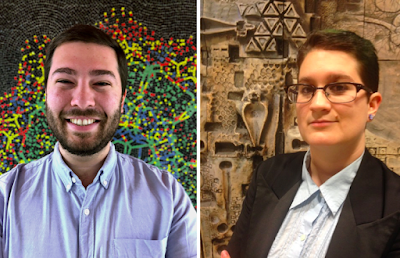
By John Aspler and Ariel Cascio John Aspler, a doctoral candidate in Neuroscience at McGill University and the Neuroethics Research Unit , focuses on the experiences of key stakeholders affected by fetal alcohol spectrum disorder, the way they are represented and discussed in Canadian media, and the potential stigmatization they face given related disability stereotypes.  Ariel Cascio, a postdoctoral researcher at the Neuroethics Research Unit of the Institut de recherches cliniques de Montréal, focuses primarily on autism spectrum conditions, identity, subjectivity, and biopolitics.  Introduction Television can be an important medium through which to explore cultural conceptions of complex topics like disability – a topic tackled by Speechless , a single-camera family sitcom. Speechless tells the story of JJ DiMeo, a young man with cerebral palsy (CP) portrayed by Micah Fowler, who himself has CP. The show focuses on JJ’s daily life as well as the experiences of his parent...

Oxytocin: The Hormone of Hype, Hope, and Healing

Image
By Shweta Sahu Due to his work interrogating the role of certain chemicals in vole behavior at Yerkes National Primate Research Center , Dr. Larry Young has come across the problem of his results being portrayed hyperbolically, as the science sometimes goes to fictional lengths. Yet this work has important implications for mental health. To demonstrate this exaggeration as well as its potential, I am going to address: 1. the buildup of the oxytocin hype, 2. the translation of the research and 3. the ethical implications in humans. Prairie voles, image courtesy of Flickr user theNerdPatrol Oxytocin and pair bonding Dr. Young researches oxytocin (OT), a neuropeptide known to be involved in birthing and associated with maternal bonding, and his lab utilizes voles as an experimental model . Their research was founded upon on the idea that prairie voles are highly social, bi-parental, and monogamous by nature while meadow voles are less social, uniparental, and promiscuous. They investig...

Primordial soup to nuts: are some men naturally selected to be better dads?

Image
Children are the future. So “why do some men choose not to invest in their children?” This was the question that Dr. James Rilling set out to answer over the last few years. Dr. Rilling is the head of the Laboratory for Darwinian Neuroscience in the Anthropology Department at Emory University and states one of the lab’s aims is “exploring the neural basis of human social cognition and behavior, particularly those aspects that have been under strong evolutionary selection pressure.” But are absent fathers the result of natural selection? In the last half-century, the basic structure of American families has been changing. Within two-parent households, fathers are spending more time with their children than they used to as more mothers work outside the home. However, there are also many more single mothers raising children without any paternal help and roughly half of all American children are raised by a single parent at some point during childhood [1]. These changes have occurred far ...

When the Hype Doesn’t Pan Out: On Sharing the Highs-and-Lows of Research with the Public

Image
By Jared Cooney Horvath Jared Cooney Horvath is a PhD student at the University of Melbourne in Australia studying Cognitive Psychology / Neuroscience. 15-years ago, a group of German researchers decided to revive the ancient practice of using electricity to effect physiologic change in the human body. Using modern equipment and safety measures, this group reported that they were able to alternately up- and down-regulate neuronal firing patterns in the brain simply by sending a weak electric current between two electrodes placed on the scalp 1 . tDCS electrode placement Today, this technique is called Transcranial Direct Current Stimulation (tDCS) and over 1,400 scientific articles (calculated by combining non-replicated articles from a joint PubMed, ISI Web of Science, and Google Scholar search using the keywords “Transcranial Direct Current Stimulation”: October 15, 2014) have been published suggesting that passing an arguably innocuous amount of electricity through the brain of ...

Can Neuroscience Validate the Excuse “Not Tonight, Dear, I have a Headache?"

Image
Men and women experience fluctuations in sexual motivation over a lifetime. Whether sexual desire is enhanced or diminished at any particular time can depend on a number of factors and circumstances, but researchers from McGill University recently set out to determine specifically how pain impacts sexual behavior. 1 Results from this study , published in The Journal of Neuroscience earlier this year, were the topic of the most recent “Neuroethics and Neuroscience in the News” discussion facilitated by Emory Women’s Gender and Sexuality graduate student Natalie Turrin and Neuroscience graduate student Mallory Bowers. To study how pain impacts sexual motivation, researchers used a partitioned Plexiglas chamber where the partition contained small, semi-circular openings only large enough for the female mice to pass through (this study required that male mice be greater than 45 g and female mice smaller than 25 g). In this set-up, the females were free to either cross the partit...

Burden of proof: does neuroscience have the upper hand?

Image
As an undergraduate, I took several introductory level philosophy classes while majoring in neuroscience. Some of it I could appreciate and most of it went over my head, but a thought that kept nagging me was, “haven’t neuroscientists solved all of these issues by now?” It was only after I had worked in neuroscience laboratories for a few years that I began to realize just how qualified all of our statements had to be due to the plethora of limitations that go along with any result. I began to wince anytime I heard someone use the word “proof” (only salesmen use the term “clinically proven”, but don’t get me started on that…). It seems clear to me now that, for the most part, natural scientists, social scientists and humanities scholars are really all working toward the same goal just in different, albeit complimentary ways. At the first “Neuroscience, ethics and the news” journal club of the semester, Lindsey Grubbs, a PhD student in Emory University’s English Department, facilitated ...

Lamarckian sh*t? Why epigenetics is not eugenics

Image
An argument could be made that communicating scientific advances to the public has never been more important. As the NIH budget stagnated, and then was cut by Sequestration, many of us have realized what a poor job we have been doing convincing the public of the importance of basic science research. Neuroscience itself has been under more scrutiny recently. As Adam Gopnik of The New Yorker wrote in a review of three new books bashing brain research, “Neuroscience can often answer the obvious questions but rarely the interesting ones.” If that is the way that the public sees it, then clearly we are losing something in translation. Recently there has been a push to reverse this trend and reaffirm biomedical research as a source of inspiration and hope for the public. The actor and author Alan Alda, who has long held a passion for science, has made it a personal mission to improve communication about science because “How are scientists going to get money from policy makers, if ...