Posts

Showing posts with the label President's Commission for the Study of Bioethical Issues

Neuroethics and the BRAIN Initiative
Image
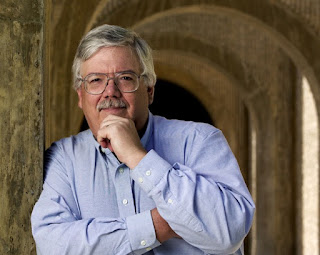
By Henry T. Greely Hank Greely is the Deane F. and Kate Edelman Johnson Professor of Law and Professor, by courtesy, of Genetics at Stanford University. He specializes in ethical, legal, and social issues arising from advances in the biosciences, particularly from genetics, neuroscience, and human stem cell research. He directs the Stanford Center for Law and the Biosciences and the Stanford Program in Neuroscience in Society ; chairs the California Advisory Committee on Human Stem Cell Research ; and serves on the Neuroscience Forum of the Institute of Medicine, the Advisory Council for the National Institute for General Medical Sciences of NIH, the Committee on Science, Technology, and Law of the National Academy of Sciences, and the NIH Multi-Council Working Group on the BRAIN Initiative . He was elected a fellow of the American Association for the Advancement of Science in 2007. His book, THE END OF SEX AND THE FUTURE OF HUMAN REPRODUCTION , was published in May 2016 . Profes...

Why defining death leaves me cold

Image
by John Banja , PhD *Editor's note: In case you missed our annual Zombies and Zombethics (TM) Symposium entitled Really, Most Sincerely Dead. Zombies, Vampires and Ghosts. Oh my! you can watch our opening keynote by Dr. Paul Root Wolpe by clicking on the image below. We recommend starting at 9:54 min. Two weeks ago, I attended a panel session on brain death at the annual conference of the American Society for Bioethics and Humanities . Forgive the bad pun, but the experience left me cold and …lifeless(?). The panel consisted of three scholars revisiting the more than a decade old conversation on defining death . Despite a standing room only crowd, there was utterly nothing new. Rather, we heard a recitation of the very familiar categories that have historically figured in the “What does it mean to be dead?” debate, e.g., the irreversible cessation of cardio-respiratory activity, the Harvard Brain Death criteria , the somatic integration account, the 2008 Presidential Commissi...

Gray Matters Volume II Released by Presidential Commission

The highly-anticipated second volume of Gray Matters: Topics at the Intersection of Neuroscience, Ethics, and Society was released by the US Presidential Commission for the Study of Bioethical Issues on March 26th. This report is in “response to President Obama’s request related to the Brain Research through Advancing Innovative Neurotechnologies (BRAIN) Initiative .” According to the Commission’s announcement, in this volume “the Bioethics Commission broadly focused its analysis on three particularly controversial topics that illustrate the ethical tensions and societal implications of advancing neuroscience and technology: cognitive enhancement, consent capacity, and neuroscience and the legal system.” “In its latest release, the Bioethics Commission seeks to clarify the scientific landscape, identify common ground, and recommend ethical paths forward. Cautioning against hyperbole and misinformation when discussing the promise of neuroscience, the report offers 14 recommendations t...

The Newly Released 6.1 Issue of AJOB Neuroscience

Image
The 6.1 Issue of the American Journal of Bioethics Neuroscience ( AJOB Neuroscience ) is now hot off the presses with two target articles highlighting ethical issues behind the use of two very different therapeutic interventions: first-in-human trials to treat Parkinson’s disease using stem-cell based therapies and prescription stimulants to enhance motivation. The Target Article “Ethical Criteria for Human Trials of Stem-Cell Derived Dopaminergic Neurons in Parkinson’s Disease” 1 by Samia A. Hurst et al. discusses three specific considerations of a phase I(safety)-II (efficacy) clinical trial designed to test an experimental neurorestorative stem cell therapy for Parkinson’s disease. Parkinson’s disease is a result of the loss of dopamine-producing neurons in the substantia nigra, and significant depletion of dopamine leads to the tremors, rigidity, and difficulty initiating or halting movement that is often seen as the disease progresses. To compensate for the diminishing level...

Neuroethics in Theory and in Practice: A First-hand Look into the Presidential Commission for the Study of Bioethical Issues

Image
Anyone who turned on CNN this past summer probably remembers the most popular news stories ranging from Obama’s recent efforts to quell political violence in Iraq to Emory University’s admission of two Ebola patients. What was missing from several (if not all of these newscasts), however, was any mention of the continuation of President Obama’s BRAIN initiative right here at Emory University. Specifically, this past June, the Atlanta university welcomed the prestigious Presidential Commission for the Study of Bioethical Issues to confer over many pertinent issues surrounding various ethical and neuroscientific issues. I was lucky enough to be able to attend the session and catch a glimpse of the commission in action. Upon the commission’s completion, I found myself excited while simultaneously confused about the group’s overall mission and decided it would be worthwhile to investigate the Bioethics Commission further. Particularly, I hoped to understand why it is that Obama created a...

June 9th and 10th: President's Commission for the Study of Bioethical Issues at Emory University

Image
The Presidential Commission for the Study of Bioethical Issues is an advisory panel that counsels the President on bioethical issues in light of scientific and medical advances. Most recently, the panel published Gray Matters: Integrative Approaches for Neuroscience, Ethics, and Society as a part of the Brain Research through Advancing Innovative Neurotechnologies (BRAIN) Initiative . This document touched on relevant ethical issues related to neuroscience and made recommendations for integrating ethics into various facets of neuroscience research, education, and policy making. On June 9–10, 2014, a public meeting of the President’s Commission for the Study of Bioethical Issues will be taking place at Emory University in the Rollins School of Public Health Building. The complete agenda is listed here , but the Commission will discuss the BRAIN Initiative and current work taking place in the field of neuroscience. Watch the live webcast and follow AJOB Neuroscience on Twitter if yo...