Posts

Showing posts with the label mental illness

Predicting Psychosis: Exploring Pre-Clinical Signs for Mental Illness
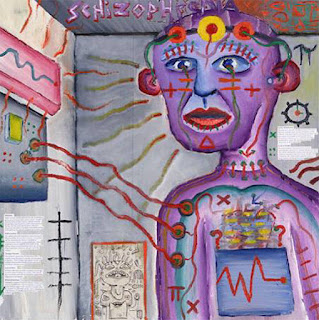
Image
By Sunidhi Ramesh This post is based on the January edition of the “Neuroethics and Neuroscience in the News” series in which Dr. Elaine Walker from Emory University discussed the ethics of assessing risk and treating brain diseases before they can be diagnosed. This self-portrait is often used to depict the distorted reality that many schizophrenia patients face. (Image courtesy of Wikimedia   Commons .) “This calculator,” a 2016 headline states, “can predict your risk of developing psychotic disorders.” Psychotic disorders , including schizophrenia and bipolar disorder with psychotic features, are characterized by noticeable deficits in “normal” behavior accompanied by hallucinations, delusions, paranoia, an early onset (the average age of onset is in the late teens or early twenties), and a derailed life course. Because of its early age at onset, the DALY (disability adjusted life years) value for psychosis is significantly greater than that of other illnesses (1). It’s no su...


"American Horror Story" in Real Life: Understanding Racialized Views of Mental Illness and Stigma

Image
By Sunidhi Ramesh Racial and ethnic discrimination have taken various forms in the United States since its formation as a nation. The sign in the image reads: "Deport all Iranians. Get the hell out of my country." Image courtesy of Wikipedia . From 245 years of slavery to indirect racism in police sanctioning and force, minority belittlement has remained rampant in American society (1). There is no doubt that this history has left minorities in the United States with a differential understanding of what it means to be American and, more importantly, what it means to be an individual in a larger humankind. Generally, our day-to-day experiences shape the values, beliefs, and attitudes that allow us to navigate the real world (2). And so, with regards to minorities, consistent exposure to these subjective experiences (of belittlement and discrimination, for example) can begin to shape subjective perceptions that, in turn, can mold larger perspectives and viewpoints. Last spring,...

Nobody Ever Believes This Story: Slam Poetry as a Palimpsestic Space for Mental Illness Identity

Image
By Chandler Batchelor Chandler Batchelor is a graduate student in the Literature, Medicine, and Culture MA program at the University of North Carolina at Chapel Hill.  She is interested in alternative and holistic approaches to mental healthcare, doctor-patient relationships in mental healthcare, and mental health advocacy. Typically, descriptions of mental illness provided by medical professionals are often taken more seriously than descriptions given by the diagnosed themselves. Biomedicine has a particular way of talking about mental abnormalities, describing mental experiences with symptoms. It uses words like “depression,” “flat affect,” and “grandiose sense of self” to depict concrete outward signs of internal dysfunction. In our culture, this biomedical rhetoric is upheld as the definitive, most correct and objective way of describing mental illness. But while biomedicine is an excellent tool for describing diseases, it often fails to capture the subjective nuances of th...

Naming the devil: The mental health double bind

Image
By Jennifer Laura Lee Jenn Laura Lee recently received her undergraduate in neuroscience from McGill University in Montreal, Canada, and hopes to pursue a PhD in neurobiology this fall. Her current interests include the advancement of women in STEM and the ethics of animal experimentation. The “ Bell Let’s Talk ” initiative swept through Canada on January 27, hoping to end the stigma associated with mental illness, one text and one share at a time. Michael Landsberg shares his thoughts in a short  video  on the Facebook page. “The stigma exists because fundamentally there’s a feeling in this country still that depression is more of a weakness than a sickness,” he explains. “People use the word depression all the time to describe a bad time in their life, a down time. But that’s very different than the illness itself.” Perhaps such a bold statement merits closer examination. Philosophers, psychologists, and neuroscientists find themselves rallying behind two starkly...