Posts

Showing posts with the label mad pride

Notes from the field: Critical Juncture at Emory

Image
by Lindsey Grubbs Early in April, Emory University hosted the third iteration of Critical Juncture . This annual(ish) graduate-student-led conference focuses on intersectionality , examining interconnecting dynamics of systems of oppression including racism, sexism, ableism, and classism. This year’s conference, while maintaining a broader focus on the complexities of identity and oppression, took as its theme “representations of the body”: which bodies are, and perhaps more importantly which are not, represented in science, politics, the arts, and the academy, and what forms do these representations take? From its beginning, the conference has links to neuroethics at Emory. One of the co-founders of the conference, Jennifer Sarrett , was a past Neuroethics Scholars Program Fellow. This year, I—one-time managing editor of this blog and current intrepid neuroethics blogger—served as one of the co-organizers. The focus at this year’s conference was on increasing opportunities for in...

Charles Bonnet syndrome, musical ears, and normal hallucinations

Image
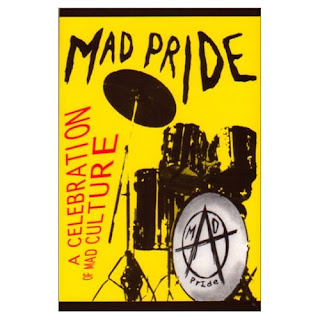
by Jonah Queen In a previous post on this blog, I wrote about the Mad Pride movement, which advocates for the rights of, and the end of stigma against, those diagnosed with psychiatric disorders. I discussed how the lack of a clear distinction between “normal” and “abnormal” psychology even leads some activists to think of these conditions as extreme emotional or sensory experiences rather than illnesses. Mad pride advocates see a trend of increasing medicalization within psychiatry, arguing that feelings and behaviors are too readily classified as pathological. But this concern with over-medicalization is not unique to the Mad Pride movement. It is expressed by a wide range of individuals, including those within the mental health establishment. But there is one area where the field of mental health seems to be moving in the opposite direction: hallucinations. DSM-5 , which has been criticized for overly broad definitions of psychiatric disorders, is restricting the diagnostic criter...

Disease or Diversity: Learning from Autism

Image
by Jillybeth Burgado The following post is part of a special series emerging from Contemporary Issues in Neuroethics, a graduate-level course out of Emory University’s Center for Ethics.  Jillybeth is a senior undergraduate double majoring in neuroscience and behavioral biology and religion. She hopes to pursue a PhD in neuroscience after working as a research assistant after graduation. Chipmunka Publishing   The idea that variation in behaviors arises through natural differences in our genome was popularized in the 1990s and termed “ neurodiversity .” Led in large part by autism spectrum disorder (autism) activists, this movement challenged the established notions of autism as a disease that needed to be eradicated, championing the acceptance of a wide array of neural differences in the population. Rejecting terms such as “normal,” proponents of neurodiversity questioned common messaging and goals of research organizations (e.g. autism is not something that needs to be eradi...

So You Want to be a “Successful” Psychopath?

Image
The following post is part of a special series emerging from Contemporary Issues in Neuroethics, a graduate-level course out of Emory University’s Center for Ethics. Within the past two years, the media has followed the recent turn toward exploring the characteristics of a “successful” psychopath. A simple Google search on “successful psychopathy” now renders a slew of attention-grabbing articles ranging from How to Protect Yourself from a Successful Psychopath to Why Psychopaths are More Successful to Is Your Boss a Psychopath? Together, these articles reference some of America’s more fascinating psychopathic fictional characters, such as Dexter , Jordan Belfort from The Wolf of Wall Street, and Frank Underwood from House of Cards, to create a case for an adaptive psychopath. The recent discussion about the successful psychopathic personality in the media most certainly raises questions about the nature of psychopathy and the ethical implications of concluding that some psychopath...

We’re All Mad Here

Image
In the early 1970’s, eight people checked themselves into psychiatric hospitals throughout the United States, complaining of hearing voices. They were all admitted, and during their hospitalizations exhibited no unusual behavior and claimed to no longer be experiencing auditory hallucinations. After stays between 7 and 52 days in the institutions, the patients were discharged and given diagnoses of either schizophrenia or bipolar disorder. None of these people had any mental illnesses, and had, in fact, falsified their symptoms as part of an experiment conducted by psychologist David Rosenhan (who was himself one of the “pseudopatients”). The results of the study were published in a 1973 paper in Science titled “On being sane in insane places” . In the paper Rosenhan argues that it is difficult to distinguish between “normality” and “abnormality” when it comes to mental health, and that, once applied, the label of a psychiatric diagnosis can be so strong that all of an individual’s ac...

A Creative Balance

Image
When it comes to creativity, one might most readily think of children. The young, innocent imagination is a great conduit for idea generation. Or perhaps the term calls to mind an image of a prolific artist who could be well described by the term "eccentric." Generally speaking though, the thought of creativity may not be immediately associated with mental illness. However there are mental illnesses that lend towards greater creativity , and some have believed that there are medicines which reduce creativity. Does our chemical attempt to monitor distraction and promote productive behavior tamper who we are at an essential level? Do the aspiring artsy-fartsy need to have some form of ADHD , bipolar disorder , psychosis , frontotemporal dementia , temporal lobe epilepsy , or depression in order to succeed? Are these types of illnesses part of our personhood makeup and consequently deserve to be embraced instead of adjusted? Perhaps a fine line can be drawn outlining what type...