Posts

Showing posts with the label enhancement

Regulating Minds: A Conceptual Typology

Image
By Michael N. Tennison  Image courtesy of Wikimedia Commons . Bioethicists and neuroethicists distinguish therapy from enhancement to differentiate the clusters of ethical issues that arise based on the way a drug or device is used. Taking a stimulant to treat a diagnosed condition, such as ADHD , raises different and perhaps fewer ethical issues than taking it to perform better on a test. Using a drug or device to enhance performance—whether in the workplace, the classroom, the football field, or the battlefield—grants the user a positional advantage over one’s competitors. Positional enhancement raises issues of fairness, equality, autonomy, safety, and authenticity in ways that do not arise in therapy; accordingly, distinguishing enhancement from therapy makes sense as a heuristic to flag these ethical issues.  These categories, however, do not capture the entire scope of the reasons for and contexts in which people use drugs or devices to modify their experiences. Con...
Grounding ethics from below: CRISPR-cas9 and genetic modification

Image
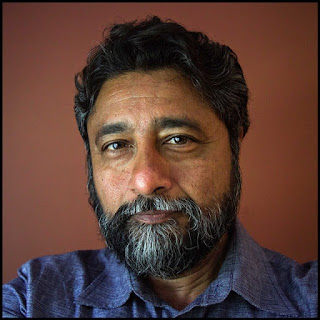
By Anjan Chatterjee The University of Pennsylvania Anjan Chatterjee is the Frank A. and Gwladys H. Elliott Professor and Chair of Neurology at Pennsylvania Hospital. He is a member of the Center for Cognitive Neuroscience , and the Center for Neuroscience and Society at the University of Pennsylvania. He received his BA in Philosophy from Haverford College, MD from the University of Pennsylvania and completed his neurology residency at the University of Chicago. His clinical practice focuses on patients with cognitive disorders. His research addresses questions about spatial cognition and language, attention, neuroethics, and neuroaesthetics. He wrote The Aesthetic Brain: How we evolved to desire beauty and enjoy art and co-edited: Neuroethics in Practice: Mind, medicine, and society, and The Roots of Cognitive Neuroscience: behavioral neurology and neuropsychology. He is or has been on the editorial boards of: American Journal of Bioethics: Neuroscience, Behavioural Neurology, Cogni...

Dangerous Love and Anti-Love Drugs: Neuroethics & Public Health Problems

Image
By Kelsey Drewry Kelsey Drewry is a student in the Master of Arts in Bioethics program at the Emory University Center for Ethics where she works as a graduate assistant for the Healthcare Ethics Consortium. Her current research focuses on computational linguistic analysis of health narrative data, and the use of illness narrative for informing clinical practice of supportive care for patients with neurodegenerative disorders. The half-priced heart-shaped boxes of chocolates lining grocery store shelves serve as an undeniable marker of the recent holiday. Replete with conceptions of idyllic romance, Valentine’s Day provides an opportunity to celebrate partnership, commitment, and love. However, for those experiencing heartbreak or unrequited love, Cupid may be a harbinger of suffering rather than giddy affection. The transition from love to pain is an incredibly common experience, and one that is formative for many. The extent of character building in heartbreak and other negative affe...

Is memory enhancement right around the corner?

Image
By Ryan Purcell “Everyone has had the experience of struggling to remember long lists of items or complicated directions to get somewhere,” Dr. Justin Sanchez of DARPA said in a recent press release. “Today we are discovering how implantable neurotechnologies can facilitate the brain’s performance of these functions.” The US Department of Defense is interested in how the brain forms memories because hundreds of thousands of soldiers – or “ warfighters ” as they are now called – have suffered from traumatic brain injury ( TBI ) and some have severe memory problems. Beyond the military, TBI is a major public health concern that affects millions of Americans as patients and caregivers and is incredibly expensive . A breakthrough treatment is needed and for that, ambitious research is required. But does this research agenda end at treating disease, or could these findings also be applied to memory enhancement goals? Beyond helping us to grab all the items on the grocery list and find the ...

The Physical, Social, and Societal Consequences of “Smart” Drugs

Image
By Sunidhi Ramesh This post was written as part of a class assignment from students who took a neuroethics course with Dr. Rommelfanger in Paris in Summer 2016. Sunidhi Ramesh, an Atlanta native, is entering her third year at Emory University where she is double majoring in Sociology and Neuroscience and Behavioral Biology.  After experiencing an educational environment in high school that was so competitive that it practically forced students into taking study drugs, cheating, and cutting corners, she founded “The Prism Project,” an initiative that revolves around anonymous stories that highlight the problems that exist within the American education system. She plans to pursue a career in medicine and has served on College Council’s Admissions and Scholarships committee, is presently active on Emory’s Committee of Academic Integrity, and is involved in the Indian Cultural Exchange organization at Emory.  “I remember the night I first took one. A friend of mine had some extra,...

Responsibility: Revis(ion)ing brains via cognitive enhancement

Image
By Shweta Sahu The Statue of Liberty, an iconic symbol of American opportunity; courtesy of Wikipedia Most every parent wants their child to grow up to be a neurosurgeon, a lawyer, or the next gen Mark Zuckerberg . That was especially true in my case, as a first generation child. When I was two, my parents came to the United States, "the land of opportunity," seeking the success that they had only heard about in India. I grew up hearing their stories of hardship when they first moved here with an infant, without a car, without any extended family, and knowing very little working English. I witnessed them struggle tirelessly to make a life for themselves and they always said that without education you are nothing and will be no one. As a child, while my friends would go to sleepovers and camping trips with friends, my dad would spend time checking my math problems on the white board at home and my mom would make me spell 50 words correctly every night. But even with all that p...