VR and PTSD: Healing from trauma by confronting fears in virtual reality environments
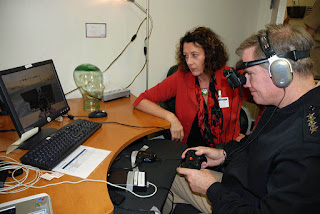
By Katie Givens Kime Image courtesy of Flikr What are the ethical implications of therapeutically re-exposing patients to trauma via virtual reality technologies? Of the 2.7 million American veterans of the Iraq and Afghanistan wars, at least 20% suffer from depression and/or post-traumatic stress disorder (PTSD) , and other studies peg that percentage even higher. As a chronic, debilitating mental illness, one PTSD symptom is hyperarousal, in which a person repeatedly re-experiences a trauma in the form of nightmares, panic attacks, and flashbacks. One of the most long-trusted therapeutic approaches to PTSD is exposure therapy; now, virtual reality technology is increasingly being used to simulate exposure to traumatic events and to environments related to the traumatic event. Image courtesy of Flikr Last month’s Neuroethics and Neuroscience in the News event featured the recent research and observations of Barbara O. Rothbaum , who is the Paul A. Janssen Chair in Neurops...