When it comes to issues of identity and authenticity in DBS, let patients have a voice
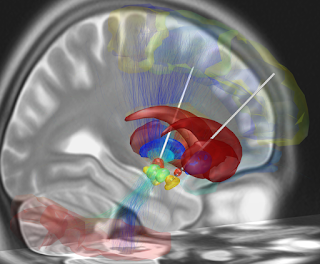
By Ryan Purcell Reconstruction of DBS electrode placement, image courtesy of Wikipedia Deep brain stimulation (DBS) is an extraordinarily popular topic in neuroethics. In fact, you could fill a book with all of the articles written on the subject just in AJOB Neuroscience alone (and the editors have considered doing this!). A special issue on the topic in AJOBN can be found here . Among the most widely discussed neuroethical issues in the DBS arena are concerns over the effects on patient identity and authenticity. But perhaps one perspective that has not been fully represented in the academic literature is that of the patients for whom this is actually their last hope to find a way out of a profound, debilitating and often years-long episode of depression. At February’s Neuroethics and Neuroscience in the News journal club, Dr. Helen Mayberg spoke passionately about the approach that led her team to attempt DBS for major depressive disorder (MDD), the ensuing media response, and ho...
