Posts

Showing posts with the label personhood

The Ethical Implications of Harvesting Human Organs from Pigs

Image
By Anayelly Medina This post was written as part of a class assignment from students who took a neuroethics course with Dr. Rommelfanger in Paris in Summer 2016. Anayelly is a rising Senior at Emory University majoring in Neuroscience and Behavioral Biology. The Chimera is a Greek mythological fire-breathing monstrosity composed of multiple animal parts with the head of a lion, the body of a goat, and the tail of a snake. Not surprisingly, in the realm of science, chimera is also the name given to an organism or embryo containing a mixture of cells from two species. Recently, the world has learned of the current research efforts being made towards growing human organs in other animals, specifically pigs [ 2 , 3 , 4 , 5 ]. From these efforts, the human-pig chimera has been developed and so have ethical questions concerning the process and outcomes of this research. According to the United Network for Organ Sharing , in the United States, about 22 people die each day while waiting for ...

New Frontiers in Animal Research Neuroethics at the Center for Neuroscience and Society

Image
By Tyler M. John Tyler John is a postbaccalaureate fellow at the National Institutes of Health Department of Bioethics interested in resource allocation, animal ethics, and moral theory. This fall, he will begin a PhD in Philosophy at Rutgers University.  The opinions expressed are the authors’ own. They do not reflect any position or policy of any U.S. governmental entity, including the National Institutes of Health or the Department of Health and Human Services.  On June 9-10, I joined a gathering of philosophers, psychologists, veterinarians, and biomedical researchers for the Animal Research Neuroethics Workshop at the Penn Center for Neuroscience and Society . The workshop, organized by neuroethicists Adam Shriver , James Serpell , and Martha Farah , focused on the ethical issues raised by new advances in neuroscience research with non-human animals. Here, researchers from many disciplines came together to share notes from the field and discuss new neuroethics problems...

Selfhood and ethics: Who am I and why does it matter?

Image
by Keenan Davis The following post is part of a special series emerging from Contemporary Issues in Neuroethics, a graduate-level course out of Emory University’s Center for Ethics. Keenan is a graduate student in Bioethics, whose work focuses on the use of virtue ethics and natural law to evaluate novel biotechnologies. He will be pursuing a PhD in the Graduate Division of Religion in the fall. What should I be doing with my life? Many approach this timeless question by considering first another: Who am I? For a wide range thinkers from Plato to Dr. Phil , we can only know what to do with ourselves when we truly know ourselves. Who we are determines and constrains how we ought to behave. For example, because my parents caused me to exist, I should behave towards them with a level of gratitude and love. Perhaps through a cause-and-effect dynamic, as a result of being their son, I should treat them respectfully. We will return to this example at the conclusion of our exploration. Hist...

Perceptions of Animals

Image
Dr. Frans de Waal By Frans de Waal, Ph.D. Frans de Waal is the Charles Howard Candler Professor of Primate Behavior at Emory University and the Director of the Living Links Center at the Yerkes National Primate Research Center . He is also a member of the United States National Academy of Sciences and the Royal Netherlands Academy of Sciences and a member of the AJOB Neuroscience editorial board. His research focuses on primate social behavior, including conflict resolution, cooperation, inequality aversion, and food-sharing.  At a recent workshop on "Beastly Morality" (April 5, 2013, Emory Ethics Center), which drew participants from all over the country, I asked an innocent question. We had about sixty scholars presenting or listening to academic papers on the human-animal relationship or the place of animals in literature, and I asked how many of them worked with animals on a daily basis. The answer: no one. It was a naive question, because if I had expected half of...

A Creative Balance

Image
When it comes to creativity, one might most readily think of children. The young, innocent imagination is a great conduit for idea generation. Or perhaps the term calls to mind an image of a prolific artist who could be well described by the term "eccentric." Generally speaking though, the thought of creativity may not be immediately associated with mental illness. However there are mental illnesses that lend towards greater creativity , and some have believed that there are medicines which reduce creativity. Does our chemical attempt to monitor distraction and promote productive behavior tamper who we are at an essential level? Do the aspiring artsy-fartsy need to have some form of ADHD , bipolar disorder , psychosis , frontotemporal dementia , temporal lobe epilepsy , or depression in order to succeed? Are these types of illnesses part of our personhood makeup and consequently deserve to be embraced instead of adjusted? Perhaps a fine line can be drawn outlining what type...

A Life With Others…In Your Head?

Image
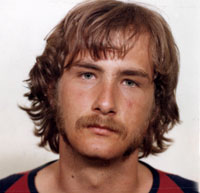
By Stepheni Uh Undergraduate Neuroscience and Behavioral Biology Major Emory University This post was written as part of the Contemporary Issues in Neuroethics Course Although decades have passed since the world first heard of Billy Milligan , his predicament and story still cause confusion and wonder. As the field of neuroscience is expanding, more light has been shed upon his condition: an extreme case of dissociative identity disorder (DID), formerly known as multiple personality disorder. Advancements in neuroscience (i.e. in research techniques) has led to the investigation of possible neurobiological correlations to the symptoms of DID – yet, due to the rare cases of this disorder, the possible neurobiological basis for DID has not been established. Despite the lack of raw data, per se, neuroscience has fueled new perspectives regarding the nature of DID such as those involving the ideas of culpability, personhood, and individuality. Billy Milligan Billy Milligan, whose birth nam...