Posts

Showing posts with the label bias

The interplay between social and scientific accounts of intergroup difference

Image
By Cliodhna O’Connor Image courtesy of Wikimedia Commons The investigation of intergroup difference is a ubiquitous dimension of biological and behavioural research involving human subjects. Understanding almost any aspect of human variation involves the comparison of a group of people, who are defined by some common attribute, with a reference group which does not share that attribute. This is an inescapable corollary of applying the scientific method to study human minds, bodies and societies. However, this scientific practice can have unanticipated – and undesirable – social consequences. As my own research has shown in the contexts of psychiatric diagnosis (O’Connor, Kadianaki, Maunder, & McNicholas, in press), gender (O’Connor & Joffe, 2014) and sexual orientation (O’Connor, 2017), scientific accounts of intergroup differences can often function to reinforce long-established stereotypes, exaggerate the homogeneity of social groups, and impose overly sharp divisions between...

The Ethical Design of Intelligent Robots

Image
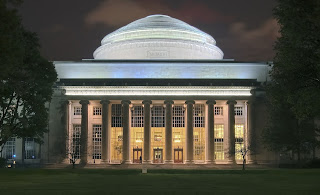
By Sunidhi Ramesh The main dome of the Massachusetts Institute of Technology (MIT). (Image courtesy of Wikimedia .) The morning of February 1, 2018, MIT President L. Rafael Reif sent an email addressed to the entire institute community. In it was an announcement introducing the world to a new era of innovation—the MIT Intelligence Quest , or MIT IQ. Formulated to “advance the science and engineering of both human and machine intelligence,” the project aims “to discover the foundations of human intelligence and drive the development of technological tools that can positively influence virtually every aspect of society.” The kicker? MIT IQ not only exists to develop these futuristic technologies, but it also seeks to “investigate the social and ethical implications of advanced analytical and predictive tools.” In other words, one of the most famous and highly ranked universities in the world has dedicated itself to preemptively consider the consequences of the future of technology ...

Cognitive Enhancement in the Movie Limitless Through a Lens of Structural Racism

Image
By Nadia Irfan This post was written as part of a class assignment from students who took a neuroethics course with Dr. Rommelfanger in Paris of Summer 2016. The Western society familiar to most of us attending the Neuroethics Network conference in Paris is certainly one that values and glorifies financial gain and socio-economic upward mobility. We are obsessed with the notion of the “optimal” self: an idealized image of a self that never tires, never ages, and is always running at its top performance. The Neuroethics Network Cinéma du Cerveau movie Limitless raises an interesting perspective about who represents this image, who achieves and maintains this lifestyle, and whether this optimal version only has value in a competitive context. I think when representing cognitive enhancement, it is important to note the lens it is viewed through. Eddie Morra, the main character in the film, is played by Bradley Cooper, “a young, able-bodied, white, cis-gendered heterosexual male,” as note...

Unintentional discrimination in clinical research: Why the small decisions matter

Image
by Arthur T. Ryan, M.A. and Elaine F. Walker, Ph.D. Arthur Ryan is a graduate student in clinical psychology at Emory University. His research focuses on understanding the etiology and neuropathology underlying severe mental illness. Elaine Walker is a Professor of Psychology and Neuroscience in the Department of Psychology at Emory University and is the Director of the Development and Mental Health Research Program, which is supported by the National Institute of Mental Health. Her research is focused on child and adolescent development and the brain changes that are associated with adolescence. She is also a member of the AJOB Neuroscience editorial board. Arthur Ryan, M.A. Over the past several decades, there has been a significant effort to minimize bias against individuals based on ethnicity and other demographic factors through the creation of seemingly impartial and objective criteria across a host of domains. For example, when the United States Federal Sentencing Guidelines wer...

Diversity in Neuroethics: it’s more important than you might think

Image
By Nicholas Fitz and Roland Nadler** Nicholas Fitz Nick is a Graduate Research Assistant at the National Core for Neuroethics at the University of British Columbia.  Roland is a third-year J.D. student at Stanford Law School and previously worked as a Graduate Research Assistant at the National Core for Neuroethics at the University of British Columbia. **equal contribution Roland Nadler The second decade of neuroethics is now well underway. Much like the human brain itself, some of its developmental “critical periods” have run out, but many others remain open. How will we use these remaining opportunities to shape the field? Junior participants in these spaces should take the initiative to engage with unresolved questions about the nature and structure of neuroethics as a discipline. After all, those of us at the beginning of our careers have a particularly significant stake in the answers to those questions, with most of our academic and professional lives still ahead of us...

Can Neuroscience Data be Used to Minimize the Effects of Stereotype Threat?

Image
Last December 2013, the neuroscience graduate students at Emory University spearheaded an effort alongside many other sponsors to organize and implement a symposium to explore the neuroscientific basis of race and gender bias. The program, entitled “Bias in the Academy: From Neural Networks to Social Networks,”  awarded the Laney Graduate School New Thinkers/New Leaders fund and support from CMBC and the Center for Ethics, aimed to provide students and faculty alike an overview of the psychological and neuroscientific research on race and gender bias and how this might be used to mitigate harmful effects of stereotype and bias in the academy. After listening to and participating in the symposium, I realized that the symposium speakers and student planners all hoped to answer a similar question regarding the nature of the brain: Is the brain “hard-wired” to categorize people into groups in a way that makes negative stereotyping inevitable or is the brain exquisitely plastic insof...

Neuroethics Journal Club: Neural Correlates of Negative Stereotype

Image
Our everyday perceptions of others can potentially be biased by cultural stereotypes. However, research has suggested that an initial, and often negative, stereotype can be downregulated via a highly connected neural network. While this regulatory process has been studied under neutral conditions, for the third journal club of the semester Neuroscience graduate student Kim Lang led a discussion about regulation of this neural network when White individuals are not under neutral conditions, but actually primed for negative African American stereotyping. A recent paper published by Forbes et al. used functional magnetic resonance imaging (fMRI) to study the amygdala, the prefrontal cortex (PFC), and the orbitofrontal cortex (OFC), three highly interconnected brain regions important for stereotyping and bias. Studies have shown that the amygdala, involved in arousal, is activated immediately when encountering a so-called out-group member. This first response can be downregulated though if...