Posts

Report from the Society for Disability Studies: Bringing Ethics, Bioethics, and Disability Studies Together

Image
By Jennifer C. Sarrett, MEd, MA Jennifer Sarrett is a 2013 recipient of the Emory Center for Ethics Neuroethics Travel Award. She is also a doctoral candidate at Emory University’s Graduate Institute of Liberal Arts working on her dissertation which compares parental and professional experiences of autism in Atlanta, GA and Kerala, India as well as the ethical issues that arise when engaging in international, autism-related work. From June 26 - 29, 2013, the Society for Disability Studies (SDS) held their annual conference in Orlando, Florida.  SDS is the primary scholarly association for the field of Disability Studies, which is an academic field of study exploring the meanings and implications of normativity, disability, and community. As with other identity-based fields of studies, including Women’s Studies, Queer Studies, and African-American Studies, the Society for Disability Studies thinks about difference and works to expose and eradicate stigma and inequality related to p...

Perceptions of Animals

Image
Dr. Frans de Waal By Frans de Waal, Ph.D. Frans de Waal is the Charles Howard Candler Professor of Primate Behavior at Emory University and the Director of the Living Links Center at the Yerkes National Primate Research Center . He is also a member of the United States National Academy of Sciences and the Royal Netherlands Academy of Sciences and a member of the AJOB Neuroscience editorial board. His research focuses on primate social behavior, including conflict resolution, cooperation, inequality aversion, and food-sharing.  At a recent workshop on "Beastly Morality" (April 5, 2013, Emory Ethics Center), which drew participants from all over the country, I asked an innocent question. We had about sixty scholars presenting or listening to academic papers on the human-animal relationship or the place of animals in literature, and I asked how many of them worked with animals on a daily basis. The answer: no one. It was a naive question, because if I had expected half of...

(Hypothetical) Crimes Against Neural Art

Image
We would expect that if there was any moral outrage to have over the treatment of cultured neural tissue, it would occur in an art gallery. Something about an art gallery sensitizes us to the well-being of critters we might not usually care about - as in the case of Garnet Hertz's Cockroach Controlled Mobile Robot  (a three wheeled robot about half the size of R2D2, driven by a Madagascar hissing cockroach) - and to cry out over events that we might otherwise willfully ignore or even accept as routine - as in Guillermo Vargas's infamous “ You Are What You Read ,” (where a starving dog was taken off the street and brought into a gallery) [1].  Instead, when neural tissue is given a robotic body and placed on display (sometimes remotely) in an art gallery, most responses seem to focus on the ambiguous nature of the works.  Artist Stephane Dumas wrote, referring to MEArt (a drawing robot controlled by a culture of rat brain cells), that “the public can experience the drawi...

Intervening in the brain: with what benefit?

Image
By Hannah Maslen, DPhil and Julian Savulescu, PhD Hannah Maslen is based at the Oxford Martin School, University of Oxford .  Julian Savulescu is Uehiro Professor of Practical Ethics at the University of Oxford, Fellow of St Cross College, Oxford and the Director of the Oxford Uehiro Centre for Practical Ethics . He is also a member of the AJOB Neuroscience editorial board. Novel neurotechnologies Last week, Nuffield Council on Bioethics released its report entitled  Novel neurotechnologies: intervening in the brain . The aim of the report is to provide a reflective assessment of the ethical and social issues raised by the development and use of new brain intervention technologies. The technologies that the report examines include transcranial brain stimulation, deep brain stimulation, brain-computer interfaces and neural stem cell therapies. Having constructed and defended an ethical framework to navigate the ethical and social concerns raised by novel neurotechnologies, ...

In Sickness and in Health - What Jewish Law Can Say about Psychology and Psychiatry

Image
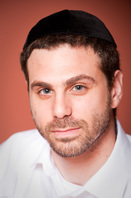
By Rabbi Ira Bedzow, MA Rabbi Ira Bedzow Rabbi Ira Bedzow is a 2013 recipient of the Emory Center for Ethics Neuroethics Travel Award. He is the project director for Moral Education research project for the TAG Institute, and is currently pursuing his PhD in Religion at Emory University. While it is obvious that the term " insanity " expresses the value judgments of a society's legal system, psychology and psychiatry also accept social mores as a guideline for determining mental illness and health, even when their practitioners deny doing so .  For example, according to the DSM-5, mental illness is diagnosed by dysfunctional behavior (though some psychiatrists are pushing for a biological categorization of mental illness ) and thus assumes social or cultural norms by which to interpret behavior in order to determine whether it is dysfunctional or not.  Because insanity and mental illness are both predicated on social norms, they are by definition determined by society...

About the Physiological Society of Japan Ethics Symposium

Image
By Tamami Fukushi, Ph.D Tamami Fukushi is a Senior Research Scientist at the Platform for the Realization of Regenerative Medicine at the Foundation for Biomedical Research and Innovation in Kobe, Japan and a member of the AJOB Neuroscience editorial board. Her research focuses on areas in neuroethics, neurophysiology, and  the regulation and ethics of stem cell research. At every annual meeting since 2003, the Physiological Society of Japan has scheduled a research ethics symposium, usually dealing with animal experiments and research misconduct. One purpose of the symposia has been to raise audience awareness regarding current ethical issues in neuroscience research. In addition, the symposia have sought to open their audience’s eyes to taking action regarding ethical practices in their daily research activities. This year, the society took up ethical issues in neuroscience. The symposium was organized by Dr. Kiyoshi Kurata, the society’s Chief of Research Ethics Committee, a...

Robots: the Answer for Treating Children with Autism Spectrum Disorder?

Image
By Guest Contributor Irina Lucaciu, Emory University   A smile appears on Jack’s face as the robot he is playing with congratulates him for accomplishing a task. Aiden seems captivated by the moving arms of Nao , a robot that has become his new playmate. Thousands of miles away, in London, a copy of Nao sits in the middle of a circle of five boys no more than 10 years old, encouraging them to imitate his movements, touch his hands, and try to identify the feelings he is describing. Nao When asked how the robot makes him feel and why, one of the boys replies that he is happy because the robot feels happy too. However, Nao and the other robots are not simply toys, and neither are Jack, Aiden, and the five British boys simply children at play. They have autism spectrum disorder, and Nao is acting as a treatment tool for improving their life experience and helping them develop socially-relevant skills. Above are described the results of robot-assisted therapy [1, 3, 9, 13]. What is aut...