Posts

Neuroimaging in the Courtroom

Image
If just any picture is worth a thousand words, then how much weight should we ascribe to a picture of our own brain? Neuroimaging can be quite compelling, especially when presented in the media as evidence for neuroscientific findings. Many researchers have pointed out though that the general public may be too entranced by fMRI images highlighting which parts of the brain are activated in response to certain stimuli, such as your iPhone , high-fat foods , or even Twitter . Neuro-realism is the idea that attaching a brain scan to a scientific finding suddenly makes the conclusion more credible, and examples of this have populated the media and the scientific literature 1 . But, from where does this theory of “neuro-seduction” really stem and is there even ample evidence to support it? For the first journal club of the new semester Emory undergraduate student and AJOB Neuroscience Editorial Intern Julia Marshall along with Emory professor Scott Lilienfeld discussed the role that neuro...

Exchanging 'Reasons' for 'Values'

Image
Julia Haas is a McDonnell Postdoctoral Fellow in the Philosophy-Neuroscience-Psychology program at Washington University in St. Louis. Her research focuses on decision-making. Over the past two decades, computational and neurobiological research has had a big impact on the field of economics, bringing into existence a new and prominent interdisciplinary field of inquiry, ‘neuroeconomics.’ The guiding tenet of neuroeconomics has been that by combining both theoretical and empirical tools from neuroscience, psychology and economics, the resulting synthesis could provide valuable insights into all three of its parent disciplines (Glimcher 2009). And although some economists have resisted the influence of neuroscience research (Gul and Psendorfer 2008), neuroeconomics has by all measures thrived as a theoretical endeavor, and proven itself as a discipline capable of marshaling substantial institutional and financial resources. For example, theories from economics and psychology have alre...

Obama’s BRAIN and Free Will

Image
By Eddy Nahmias, PhD Eddy Nahmias is professor in the Philosophy Department and the Neuroscience Institute at  Georgia State University . He is also a member of the AJOB Neuroscience editorial board. On April 2, 2013 President Barack Obama announced the BRAIN Initiative , a 10-year, $3 billion research goal to map all of the neurons and connections in the human brain. The BRAIN (Brain Research through Advancing Innovative Neurotechnologies) Initiative is modeled on the Human Genome Project, which successfully sequenced the entire DNA code of the human genome in 2003. Our brains, with 100 trillion neuronal connections, are immensely more complicated than our DNA, so the BRAIN Initiative has a much higher mountain to climb. But let’s suppose that, finally, during the next Clinton presidency, the BRAIN Initiative is completed…. that is, the presidency of Charlotte Clinton, Bill and Hilary’s grandchild. In fact, suppose that eventually neuroimaging technology advance...

When the Hype Doesn’t Pan Out: On Sharing the Highs-and-Lows of Research with the Public

Image
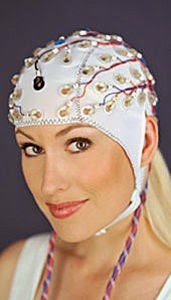
By Jared Cooney Horvath Jared Cooney Horvath is a PhD student at the University of Melbourne in Australia studying Cognitive Psychology / Neuroscience. 15-years ago, a group of German researchers decided to revive the ancient practice of using electricity to effect physiologic change in the human body. Using modern equipment and safety measures, this group reported that they were able to alternately up- and down-regulate neuronal firing patterns in the brain simply by sending a weak electric current between two electrodes placed on the scalp 1 . tDCS electrode placement Today, this technique is called Transcranial Direct Current Stimulation (tDCS) and over 1,400 scientific articles (calculated by combining non-replicated articles from a joint PubMed, ISI Web of Science, and Google Scholar search using the keywords “Transcranial Direct Current Stimulation”: October 15, 2014) have been published suggesting that passing an arguably innocuous amount of electricity through the brain of ...

Neuroscience in the Courtroom: An Attempt for Clarity

Image
*Editor’s note: You can catch a lengthier discussion of this topic at our Jan 29th session of Neuroscience and Neuroethics in the News . When people think about functional magnetic resonance imaging (fMRI) and the courtroom, many often think of mind reading or colorful images of psychopathic brains. Portable fMRI machines capable of reading our personal thoughts pop into our heads and arouse a fear that one day a neuroscientist could reasonably discern our deepest secrets through a brain scan. Despite recent scholarship that suggests a world filled with covert fMRI lie detection devices is far away (if ever attainable), I think further attention should be paid to how people think about neuroscience and interpret scientific information that draws on brain-laden language, particularly in the courtroom (Farah, Hutchinson, Phelps, & Wagner, 2014). This topic is of special interest to me as it is the focus of my undergraduate research thesis. I also think it should be relevant to neuro...

“Believe the children”? Childhood memory, amnesia, and its implications for law

Image
How reliable are childhood memories? Are small children capable of serving as reliable witnesses in the courtroom? Are memories that adults recall from preschool years accurate? These questions are not only important to basic brain science and to understanding our own autobiographies, but also have important implications for the legal system. At the final Neuroscience, Ethics and the News journal club of the 2014 Fall semester, Emory Psychologist Robyn Fivush led a discussion on memory development, childhood amnesia, and the implications of neuroscience and psychology research for how children form and recall memories. This journal club discussion was inspired by a recent NPR story that explored the phenomenon of childhood amnesia. Why is it that most of us cannot form long-term memories as infants, at least in the same way that we can as adults? This fundamental question has fascinated many researchers and psychologists and neuroscientists today are tackling it in innovative ways. E...

Ethical Issues in Neurosurgery: A Special Issue of Virtual Mentor

Image
This month the American Medical Association's journal Virtual Mentor published a series of articles about the ethical issues pertaining to neurosurgery. Some of the articles include discussions about deep brain stimulation  in early-stage Parkinson Disease, simulation and neuro-surgery teaching tools, and integrating ethics into science education . The special issue also featured two members of the American Journal of Bioethics Neuroscience: editor-in-chief Dr. Paul Root Wolpe , and editor Dr. John Banja . The issue was guest edited by a neurosurgical resident at Emory University, Jordan Amadio . Click here to view the special issue. Emerging Ethical Issues in Neurosurgery: An Interview with Dr. Wolpe by Dr. Jordan Amadio "The single most important thing to remember is that when we intervene in the brain it is a completely different kind of intervention than when we intervene in any other part of the body. It has the potential of altering those aspects of ourselves that we t...