Posts

Disease or Diversity: Learning from Autism
Image
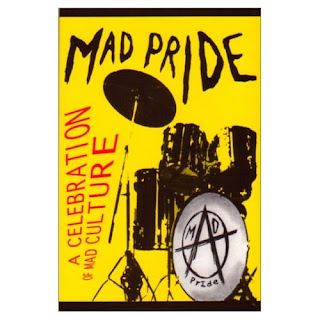
by Jillybeth Burgado The following post is part of a special series emerging from Contemporary Issues in Neuroethics, a graduate-level course out of Emory University’s Center for Ethics.  Jillybeth is a senior undergraduate double majoring in neuroscience and behavioral biology and religion. She hopes to pursue a PhD in neuroscience after working as a research assistant after graduation. Chipmunka Publishing   The idea that variation in behaviors arises through natural differences in our genome was popularized in the 1990s and termed “ neurodiversity .” Led in large part by autism spectrum disorder (autism) activists, this movement challenged the established notions of autism as a disease that needed to be eradicated, championing the acceptance of a wide array of neural differences in the population. Rejecting terms such as “normal,” proponents of neurodiversity questioned common messaging and goals of research organizations (e.g. autism is not something that needs to be eradi...

Forget the Map; Trust Your Brain: The Role Neuroscience Plays in Free Will

Image
by Fuad Haddad The following post is part of a special series emerging from Contemporary Issues in Neuroethics, a graduate-level course out of Emory University’s Center for Ethics.  Fuad is an undergraduate junior at Emory studying neuroscience and behavioral biology and ethics. He currently performs research at Yerkes National Primate Research Center under Dr. Larry Young, studying the relationship of single nucleotide polymorphism and pair bonding. His other research interests are the relationship between oxytocin and allopatric grooming as a model of empathy.  Lizzie laughs as we drive down Briarcliff. “What do you mean an adventure?” she chuckles at me. I have a propensity to get lost for fun, an unhealthy and interesting habit. We approach a stop light. “Left, right, straight – pick one!” I say. As we arrive at a consensus, we journey onward until we reach a green highway sign that signals the exit to Athens. Her smile gives her motive away; I think, “Sorry Emo...

Is Multilingualism a Form of Cognitive Enhancement?

Image
The following post is part of a special series emerging from Contemporary Issues in Neuroethics, a graduate-level course out of Emory University’s Center for Ethics. People often ask me what language I dream in. I usually tell them that I dream in both languages – Romanian and English – and that it depends on the content of the dream and on the people featured in it. I associate emotional states with my native Romanian, while organized, sequential thinking is easier in English. Most of the time, I am not even aware of the identity of the language I produce and hear in my dreams. Leaving the mysterious dimension of dreams behind, how does the multilingual brain navigate the world? Faced with an information-dense environment, it is able to switch its language of appraisal at the moment’s need. Consider the increasingly large group of bilingual English-speaking Hispanics in the United States. Most of them use English in their academic and work environments, then effortlessly switch to Sp...

So You Want to be a “Successful” Psychopath?

Image
The following post is part of a special series emerging from Contemporary Issues in Neuroethics, a graduate-level course out of Emory University’s Center for Ethics. Within the past two years, the media has followed the recent turn toward exploring the characteristics of a “successful” psychopath. A simple Google search on “successful psychopathy” now renders a slew of attention-grabbing articles ranging from How to Protect Yourself from a Successful Psychopath to Why Psychopaths are More Successful to Is Your Boss a Psychopath? Together, these articles reference some of America’s more fascinating psychopathic fictional characters, such as Dexter , Jordan Belfort from The Wolf of Wall Street, and Frank Underwood from House of Cards, to create a case for an adaptive psychopath. The recent discussion about the successful psychopathic personality in the media most certainly raises questions about the nature of psychopathy and the ethical implications of concluding that some psychopath...

Can Sugar be Addicting?

Image
by Michael Kuhar, PhD Editor’s Note: Dr. Kuhar is a Candler Professor at the Yerkes National Primate Research Center and Senior Faculty Fellow in the Center for Ethics at Emory University.  An expert in addiction, he is one of the most productive and highly cited scientists worldwide.  He has received a number of prestigious awards for his work, and is involved in many aspects of brain/behavioral research and education. You might be interested in his book: The Addicted Brain .  Recently, Constance Harrell facilitated an Emory Neuroethics Program Neuroscience and Neuroethics in the News Seminar on sugar and depression. Obesity became a topic and, not surprisingly, out of this discussion arose the question, “Can sugar be addicting?”  This is closely related to the question, “Can food be addicting?” Somebody might say, we need sugar/food to be healthy, and we can’t do without them, so how can we say they are addicting?  Well, there is an answer to this.  Add...

Hot off the presses! Ethical issues with direct-to-consumer neuroscience

Image
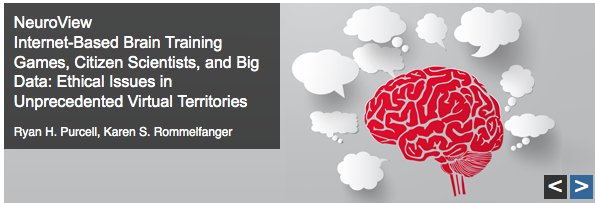
Ethical issues with Lumosity and other Direct-to-Consumer Brain Training Games by Emory Neuroethics Program Director and AJOB Neuroscience Editor-in-Residence, Dr. Karen Rommelfanger and AJOB Neuroscience editorial intern Ryan Purcell. Article is open access here for the next 50 days until June 11, 2015. "Internet brain training programs, where consumers serve as both subjects and funders of the research, represent the closest engagement many individuals have with neuroscience. Safeguards are needed to protect participants’ privacy and the evolving scientific enterprise of big data."

A Special Event Reprise: Exploring the Ethics of Cognitive Enhancement and the University's Policy at Emory

Image
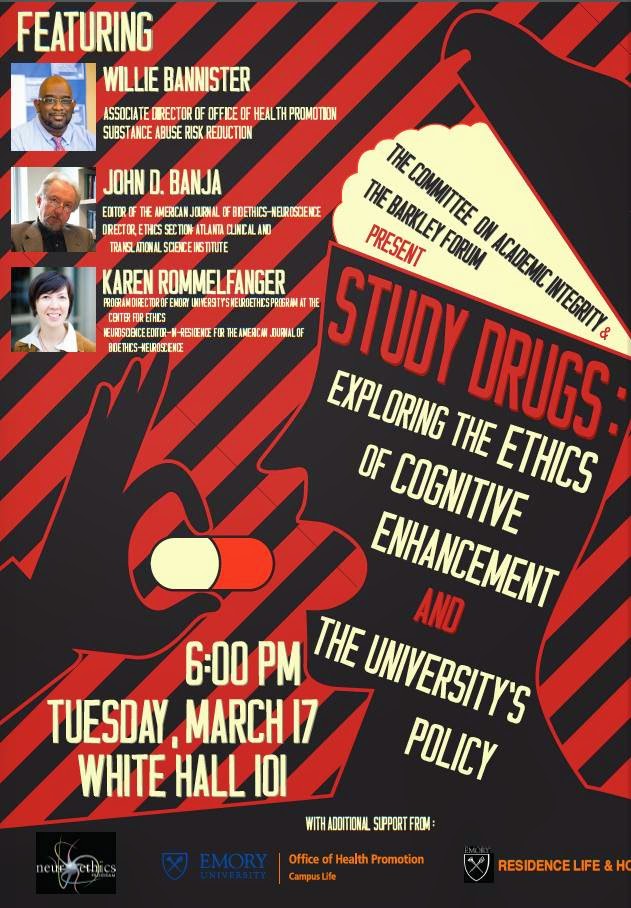
Last month, Emory’s Committee on Academic Integrity and the Barkley Forum collaborated to host “Study Drugs: Exploring the Ethics of Cognitive Enhancement and the University’s Policy.” The program featured a debate among four Emory University undergraduates and a discussion between Emory Center for Ethics's very own Dr. Karen Rommelfanger and Dr. John Banja  in addition to Willie Bannister , Emory’s Associate Director of Health Promotion. This event, organized by Emory University senior Grant Schleifer, brought out students from many areas of study to weigh in on how the university can better address the potential issue of increasing usage of cognitive enhancement drugs within Emory’s student body. In an effort to relay the contents of the event to the greater student body, the speeches from the event are displayed below in the order of their presentation. This 20-minute debate included two affirmative speeches advocating that Emory ought to take a stance on the use of cognitive ...