Posts

The freedom to become an addict: The ethical implications of addiction vaccines

Image
by Tabitha Moses  Tabitha Moses, M.S., is Administrative and Research Coordinator at Lehman College, CUNY, as well as a Research Affiliate at the National Core for Neuroethics at the University of British Columbia. Tabitha earned her BA in Cognitive Science and Philosophy and MS in Biotechnology from The Johns Hopkins University. She has conducted research in the areas of addiction, mental illness, and emerging neurotechnologies. She hopes to continue her education through a joint MD/PhD in Neuroscience while maintaining a focus on neuroethics. The introduction of “addiction vaccines” has brought with it a belief that we have the potential to cure addicts before they have ever even tried a drug. Proponents of addiction vaccines hold that they will: prevent children from becoming addicted to drugs in the future,  allow addicts to easily and safely stop using drugs, and  potentially lower the social and economic costs of addiction for society at large. However, it is cri...

Combating neurohype

Image
by Mo Costandi Mo Costandi trained as a developmental neurobiologist and now works as a freelance writer based in London. His work has appeared in Nature, Science, and Scientific American, among other publications. He writes the Neurophilosophy blog , hosted by The Guardian, and is the author of 50 Human Brain Ideas You Really Need To Know , published by Quercus in 2013, and Neuroplasticity, forthcoming from MIT Press. Costandi also sits on the Board of Directors  of the International Neuroethics Society . In 2010, Judy Illes , president elect of the International Neuroethics Society , argued that neuroscientists need to communicate their research to the general public more effectively. Five years on, that message is still pertinent - and perhaps even more so. Since then, public interest in neuroscience has continued to grow, but at the same time, coverage of brain research in the mass media is often inaccurate or sensationalist, and myths and misconceptions about the brain see...

Getting aHead: ethical issues facing human head transplants

Image
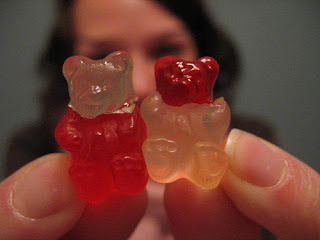
By Ryan Purcell Gummy bear head transplant, courtesy of flickr user Ella Phillips In a widely circulated Boston Globe editorial this summer, Steven Pinker told bioethicists to “get out of the way” of scientific progress. There is abundant human suffering in the world today, he said, and the last thing we need is a bunch of hand wringing to slow down efforts to attenuate or even eliminate it. The prospect of head transplantation, however, has the potential to make us all a bit more appreciative of our local bioethicists. Even if there were not any technical issues (of which, there are of course plenty ), coming to terms with the muddier personal and societal issues inherent in a procedure such as this could take quite a while. Nevertheless, Dr. Sergio Canavero is not planning to wait around and wants to perform a human head transplantation by the end of 2017. Are we ready? Dr. Jordan Amadio , an Emory neurosurgery resident and co-founder of Neurolaunch , led a discussion on the topi...

Don’t miss our Special Issue of AJOB Neuroscience: The Social Brain

Image
By Katie Strong, PhD If you haven’t already, be sure to read the 6.3 Issue of AJOB Neuroscience , our special issue on The Social Brain guest edited by Dr. Jean Decety . The issue centers on the biological, neuroscientific, and clinical evidence for human social cognition, along with the philosophical and ethical arguments for modifying morality and social emotions and behaviors, such as empathy, trust, and cooperativity. The first target article by Jean Decety and Jason M. Cowell entitled “Empathy, Justice, and Moral Behavior” argues that despite the importance of empathy for driving our social lives, forging necessary social bonds, and making complex decisions, empathy alone is not enough in regards to moral resolutions and judgements. While empathy underpins cooperativity and the formation of social bonds, empathy has evolved to promote bias and in-group social preferences. The target article provides evidence that empathy does not always lead to moral decisions, and empathy ofte...

Widening the use of deep brain stimulation: Ethical considerations in research on DBS to treat Anorexia Nervosa

Image
by Carolyn Plunkett Carolyn Plunkett is a Ph.D. Candidate in the Philosophy Department at The Graduate Center of City University of New York. She is also an Ethics Fellow in The Bioethics Program at the Icahn School of Medicine at Mount Sinai, and a Research Associate in the Division of Medical Ethics at NYU Langone Medical Center. Carolyn will defend her dissertation in spring 2016, and, beginning July 2016, will be a Rudin Post-Doctoral Fellow in the Divisions of Medical Ethics and Medical Humanities at NYU Langone Medical Center.  This post is part of a series that recaps and offers perspectives on the conversations and debates that took place at the recent 2015 International Neuroethics Society meeting. Karen Rommelfanger , founding editor of The Neuroethics Blog, heard a talk I gave on deep brain stimulation (DBS) at Brain Matters! 3 in 2012. Three years later, she heard a brief synopsis of a paper I presented a few weeks ago at the International Neuroethics Society Annual Mee...

Do you have a mouse brain? The ethical imperative to use non-human primates in neuroscience research

Image
by Carlie Hoffman Much of today’s neuroscience research investigating human brain diseases and disorders utilizes animal models. Animals ranging from flies, rodents, and non-human primates are routinely used to model various disorders, with mice being most commonly utilized. Scientists employ these animal models to approximate human conditions and disorders in an accessible manner, with the ultimate purpose of applying the findings derived in the animal back into the human brain. Rhesus macaques , a species of NHP often used in research. The use of animals in research has been the source of much debate, with people either supporting or objecting their use, and objections arising from animal rights activists , proponents of critical neuroscience such as Nikolas Rose and Joelle Abi-Rached , and others. A main focus of this debate has also been the use of non-human primates (NHP) in research. The cognitive functions and behaviors of NHPs are more closely related to those seen in hu...

Why defining death leaves me cold

Image
by John Banja , PhD *Editor's note: In case you missed our annual Zombies and Zombethics (TM) Symposium entitled Really, Most Sincerely Dead. Zombies, Vampires and Ghosts. Oh my! you can watch our opening keynote by Dr. Paul Root Wolpe by clicking on the image below. We recommend starting at 9:54 min. Two weeks ago, I attended a panel session on brain death at the annual conference of the American Society for Bioethics and Humanities . Forgive the bad pun, but the experience left me cold and …lifeless(?). The panel consisted of three scholars revisiting the more than a decade old conversation on defining death . Despite a standing room only crowd, there was utterly nothing new. Rather, we heard a recitation of the very familiar categories that have historically figured in the “What does it mean to be dead?” debate, e.g., the irreversible cessation of cardio-respiratory activity, the Harvard Brain Death criteria , the somatic integration account, the 2008 Presidential Commissi...