Posts

Is Neuromarketing Influencing Pathological Shopping Behavior?

Image
By Elena Lopez Elena Lopez is currently pursuing her BBA at Goizueta Business School and is also pursuing a degree in Neuroscience at Emory College of Arts & Sciences. She is involved in volunteer-related organizations that help those with limited resources and offer free consulting services, such as Volunteer Medical Interpretation Services and Emory Venture Strategic Partners. Elena developed a curiosity for neuroethics after attending the NBB Paris study abroad program and the 3rd international Neuroethics Network conference. She hopes to combine her passion for science and business in her future career goals. Just over a month has passed since the biggest holiday shopping season of the year, and many Americans are already planning how they will financially recover from their overspending and failed budgeting plans. Financial sites like Forbes and the CNBC personal finance page have already come out with articles titled "Oops, you overspent on the holidays" and "...

Neuroethics and the Third Offset Strategy

Image
By Jonathan D. Moreno Jonathan D. Moreno is the David and Lyn Silfen University Professor at the University of Pennsylvania where he is a Penn Integrates Knowledge (PIK) professor. At Penn he is also Professor of Medical Ethics and Health Policy, of History and Sociology of Science, and of Philosophy. Moreno is an elected member of the National Academy of Medicine and is the U.S. member of the UNESCO International Bioethics Committee. A Senior Fellow at the Center for American Progress in Washington, D.C., Moreno has served as an adviser to many governmental and non-governmental organizations, including three presidential commissions, the Department of Defense, the Department of Homeland Security, the Department of Health and Human Services, the Centers for Disease Control, the Federal Bureau of Investigation, the Howard Hughes Medical Institute, and the Bill and Melinda Gates Foundation. Moreno has written several books , including Impromptu Man: J.L. Moreno and the Origins of Psyc...

The Medicalization of Mental Illness in Gun Violence

Image
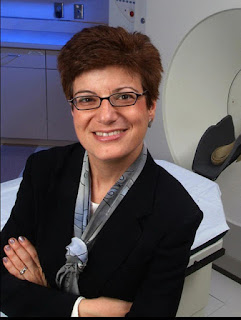
By Carolyn C. Meltzer, MD Dr. Meltzer  serves as the William P. Timmie Professor and Chair of the Department of Radiology and Imaging Sciences and as the Associate Dean for Research at the Emory University School of Medicine. Her work focuses on applying novel advanced imaging strategies to better understand brain structure-function relationships in normal aging, late-life depression, and Alzheimer’s disease. She is also involved in oncologic imaging research and, while at the University of Pittsburgh, oversaw the clinical evaluation of the world’s first combined PET/CT scanner. She established the Emory Center for Systems Imaging to broadly support the advance of imaging technologies in basic and translational research, including beta testing of the first human combined MRI/PET scanner. Dr. Meltzer has also served as the Chair of the Neuroradiology Commission and Chair of the Research Commission on the American College of Radiology’s Board of Chancellors, President of the Academy ...

A CRISPR View of Life

Image
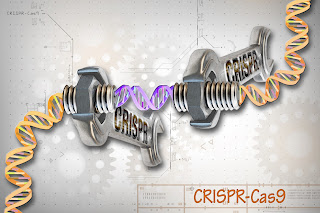
By Shweta Sahu Image courtesy of Wikimedia Commons We now live in a society where many are trying to get a leg up where they can, whether it be through pharmacological neuroenhancement (like Ritalin and Adderall) or other neurotechnologies (like transcranial direct current simulation ). Technology also allows us to exert an even earlier influence on neurodevelopmental disorders through prenatal genetic testing for fetuses. Such technologies include amniocentesis and chorionic villus sampling , that screen for Down’s , Edwards ’ and Patau’s syndromes, and give parents the chance to decide whether they would like to terminate or continue with their pregnancy. One article even claims 53% of all pregnancies were aborted following prenatal diagnoses of Down’s Syndrome, though there is still much dispute over the exact numbers. More recently, research has turned to looking into how to intervene at even earlier stages with gene editing of embryos . CRISPR (clustered regularly interspace...

Future (Brain) Identities, Lost in Translation

Image
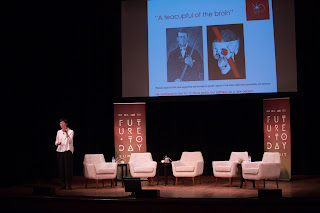
On December 6-7, 2016, the 92nd Street Y and the Future Today Institute successfully convened leading "research scientists, technologists, ethicists, policy makers, authors, elected officials, academics and artists to take stock of where we are—and where we are going."  On Dec 7, Emory's own Neuroethics Program Director, Dr. Karen Rommelfanger gave the closing keynote for the Future. Today Summit at the 92Y in New York. The topic of her talk was Future (Brain) Identities, Lost in Translation. A preview of her talk can be found below. In the full talk Dr. Rommelfanger discusses how neuronal signals are translated into actions of machines or even other brains. She concludes that many things have not changed with these technologies. Talking on the phone is probably still a better way to communicate than a brain to brain interface and frankly as far as powerful prosthetics go the most powerful brain prosthetic for memory continues to be the written word. Image cr...

Is memory enhancement right around the corner?

Image
By Ryan Purcell “Everyone has had the experience of struggling to remember long lists of items or complicated directions to get somewhere,” Dr. Justin Sanchez of DARPA said in a recent press release. “Today we are discovering how implantable neurotechnologies can facilitate the brain’s performance of these functions.” The US Department of Defense is interested in how the brain forms memories because hundreds of thousands of soldiers – or “ warfighters ” as they are now called – have suffered from traumatic brain injury ( TBI ) and some have severe memory problems. Beyond the military, TBI is a major public health concern that affects millions of Americans as patients and caregivers and is incredibly expensive . A breakthrough treatment is needed and for that, ambitious research is required. But does this research agenda end at treating disease, or could these findings also be applied to memory enhancement goals? Beyond helping us to grab all the items on the grocery list and find the ...

Meet Tomorrow's World: A Meeting on the Ethics of Emerging Technologies

Image
By Marcello Ienca Marcello Ienca, M.Sc., M.A., is a PhD candidate and research assistant at the Institute for Biomedical Ethics , University of Basel, Switzerland. His current projects include the assessment of intelligent assistive technologies for people with dementia and other neurocognitive disabilities, the regulation of pervasive neurotechnology, and the neurosecurity of human-machine interfaces. He is the chair of the Student/Postdoc Committee of the International Neuroethics Society and the current coordinator of the Swiss Network for Neuroscience, Ethics and Law. Technology is rapidly reshaping the world we live in. In the past few decades, mankind has not significantly changed biologically, but human societies have undergone continuous and unprecedented developments through technological innovation. Today, most human activities—from messaging to geolocation, from financial transactions to medical therapies— are computer-mediated. In the next decades, the quantity and variet...